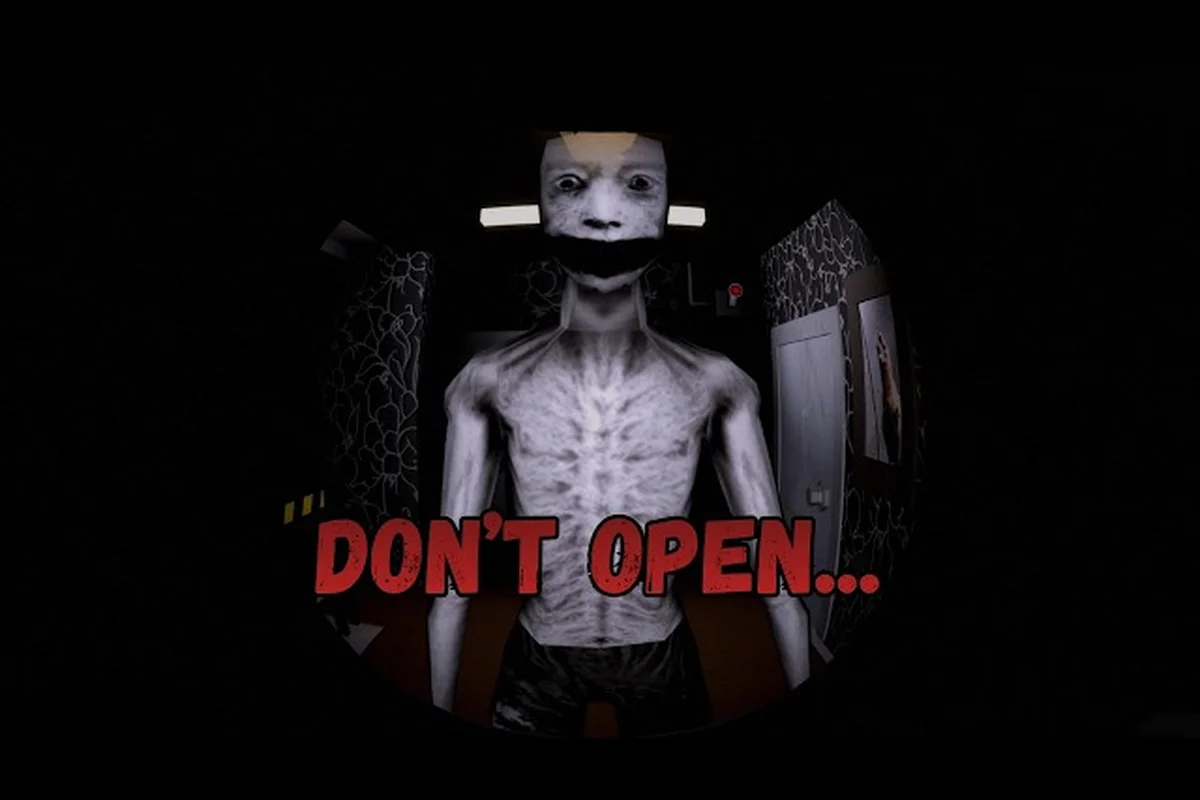
You are alone in a hotel room after midnight, and strangers are knocking. Keep the Door Locked how to start is the exact question new players ask when they boot up this Roblox horror title, because the game throws you straight into the tension without hand-holding. Knowing who to trust and who to turn away makes the difference between surviving until sunrise and becoming another cautionary tale, so this guide breaks down everything you need before that first knock echoes through your room.
Keep the Door Locked Quick Start Basics
The game places you in a small hotel room with a monitor for camera cycling, a night vision toggle, and a lock toggle on the door — three tools that define your entire survival loop. Launched on May 28, 2026, by developer Hotel Room Services (KivC), the experience has already pulled in 4.3 million visits with over 10,000 players online at peak hours, according to the official Roblox listing. Your objective is simple on paper: decide who gets inside based on what you see through the cameras.
Before you worry about advanced tactics, lock down these fundamentals: always close the door behind you after entering a room, and never leave it ajar while looting. A single open door can let the monster slip in silently, ending your run in seconds. New players often die here, so make this habit your first priority.
-
Check the camera feed before touching the door — every single time, no exceptions, because the first knock usually comes early in the night.
-
Learn the room layout — the spawn point, the door position, and the monitor are your anchors, and you should be able to navigate them without thinking.
-
Keep the lock engaged by default — opening the door is a deliberate action, not a reflex, and treating it that way saves you from panic decisions.
Your Three Core Tools
The monitor cycles through hallway camera feeds, giving you eyes on who is approaching before they reach your door. The night vision toggle helps when the hallway lights are dim or flickering, which happens more often as the night progresses. The lock toggle physically opens or secures your door, and it is the only direct interaction you have with the visitor on the other side.
| Tool | Primary Function | When to Use It |
|---|---|---|
| Monitor | Camera cycling between hallway feeds | Before every knock response |
| Night Vision | Brightens dark camera feeds | When hallway lights flicker or go dark |
| Lock Toggle | Opens or secures the door | Only after verifying the visitor |
Players who survive their first night almost always report the same habit: they check the feed, run through a mental checklist, and only then touch the lock. Implementing that routine from your very first shift is the foundation of any reliable keep the door locked quick start strategy, because it replaces instinct with procedure when anxiety spikes.
Understanding the Visitor System
Every visitor who knocks falls into one of two buckets: genuine guests who need help, or anomalies that are lying to get inside. The challenge is that both types sound equally convincing, and the game deliberately blurs the line between them to keep you second-guessing. Safe visitors tell logical stories that match the room and the situation, while anomalies contradict themselves or reference details that do not add up.
The pattern recognition skills you build here transfer directly to the keep the door locked anomaly walkthrough, where anomaly identification becomes the core skill for later nights. For now, focus on spotting the obvious tells that most beginners miss, such as subtle shifts in door texture or audio cues that repeat inconsistently. Mastering these early signs reduces reaction time, letting you conserve flashlight battery for the more erratic anomalies that appear after night three.
Typical Visitor Profiles You Must Recognize
-
Lost guests — they describe a room number or a person that fits the hotel's layout; their stories have internal consistency.
-
Staff members — they claim maintenance issues or emergencies; they rarely ask for anything unusual and their requests match hotel policy.
-
Anomalies — they repeat themselves, mention details that do not exist in your room, or ask you to open the door without explaining why.
| Visitor Type | Typical Behavior | Trust Indicator |
|---|---|---|
| Lost Guest | Confused, checking room number | Story matches hotel layout |
| Staff Member | Urgent, professional tone | Request matches hotel policy |
| Anomaly | Repetitive, contradictory | Story falls apart under scrutiny |
Community testing suggests that safe visitors pass the "three question test" — they can answer follow-up questions about their story without contradicting themselves, while anomalies stumble or loop. This is not an official mechanic, but players report it working consistently across multiple nights, making it a valuable heuristic rather than a guaranteed rule.
Your First Night: A Walkthrough Companion
Your first night is less about perfect play and more about learning the rhythm of the game. The first knock usually comes early in the night, according to player reports, so do not assume you have time to settle in. Use the early minutes to memorize camera positions and get comfortable cycling through feeds, because hesitation at the first knock is what kills most beginners.
Step-by-Step Night One Routine
Follow this progression to maximize your learning while minimizing risk: start on the easiest difficulty to memorize door patterns, then gradually increase the monster's speed once you can consistently survive. This lets you test new strategies without wasting key items, since each failed run costs you a lockpick. Veteran players often skip straight to Hard, but that only works if you already know every hiding spot.
-
Step 1: Spawn and scan — Immediately check all camera feeds once to establish a baseline of what the hallway looks like at the start of the night.
-
Step 2: Lock the door — Engage the lock toggle right away; the door starts unlocked, which is a trap for players who assume it is safe.
-
Step 3: Monitor the feeds — Cycle through cameras every 30 seconds or so, because visitors can approach silently and you want early warning.
-
Step 4: Evaluate the knock — When someone knocks, check the feed first, listen to their story, and ask a clarifying question if something feels off.
-
Step 5: Decide and act — Open the door for safe visitors, keep it locked for anomalies, and never second-guess a decision once you make it.
What to Expect as the Night Progresses
The game escalates in predictable waves, and knowing what is coming helps you stay calm: each new phase triggers a distinct audio cue and a brief lull before the threat intensifies. Players who memorize this rhythm can pre-position near the door or stockpile batteries, turning a frantic scramble into a controlled routine that the community often calls "reading the loop."
-
Early night (12 AM – 2 AM) — light traffic; most visitors are legitimate, which trains you to trust your judgment.
-
Middle night (2 AM – 4 AM) — visitor frequency increases and anomaly behavior becomes more convincing; this is where most new players make their first mistake.
-
Late night (4 AM – 6 AM) — the game tests everything you learned; anomalies copy safe visitor patterns and force you to rely on subtle tells.
Players who record their sessions and review their deaths consistently find that most losses come from rushing to open the door during the middle night, when the pressure spikes and judgment gets cloudy. If you want a more detailed breakdown of survival tactics, the keep the door locked tips for beginners companion piece covers advanced decision frameworks that build on this foundation.
Core Survival Strategies
Piloting your way through the night requires more than just knowing the mechanics; it demands a strategy that adapts to what the game throws at you. The keep the door locked guide approach that most experienced players recommend centers on three pillars: information gathering, decision discipline, and emotional regulation.
| Strategy Pillar | Core Action | Common Failure |
|---|---|---|
| Information Gathering | Check feeds constantly | Assuming the hallway is empty |
| Decision Discipline | Stick to your rules | Opening the door out of curiosity |
| Emotional Regulation | Stay calm under pressure | Panic-locking when safe visitors knock |
The Information Advantage
Information is your only weapon in this game, and the monitor is your source of truth. Cycle through cameras deliberately, not frantically, and pay attention to details like which direction a visitor walks from and how long they pause at your door. These small data points build up into a picture that helps you predict behavior later in the night.
The night vision toggle is more valuable than most beginners realize, because hallway lighting is inconsistent and anomalies often exploit dark corners to hide their tells. Flipping it on during uncertain moments costs nothing and can reveal details that make your decision obvious.
Decision Discipline Under Pressure
When you hear a knock, your heart rate spikes, and that is exactly what the game wants. The visitors are designed to create urgency, and anomalies specifically use emotional appeals to get you to act before you think. Building a personal checklist ritual — check feed, listen to story, ask one question, decide — gives your brain a structure to follow when panic tries to take over.
The trick is making the ritual automatic, because that is what allows you to maintain judgment even when the game is throwing multiple visitors at you in quick succession. Players who survive consistently report that they stop "feeling" their way through knocks and start "processing" them instead, which is a mindset shift that transforms your survival rate.
Keep the Door Locked Guide: Advanced Patterns
Once you have survived a few nights, you will start noticing patterns that the game does not explicitly teach. The keep the door locked walkthrough community has documented several behaviors that repeat across sessions, and understanding them gives you a significant edge over players who only react to what is in front of them.
Behavioral Patterns Worth Tracking
These patterns come from community testing and player reports, so treat them as strong indicators rather than absolute rules: in practice, the entity’s behavior can shift with server lag or map layout, and a pattern that holds in one run may fail in the next. For best results, pair these observations with live audio cues and door-timing checks, since relying solely on them often leads to premature locks or wasted flashlight battery.
-
Visitor pacing — safe visitors tend to walk at a steady pace toward your door, while anomalies sometimes pause or change speed mid-approach.
-
Knock frequency — a single knock followed by silence is more common with safe visitors; anomalies often knock in bursts or rhythmically.
-
Response timing — safe visitors usually wait patiently after knocking, while anomalies may knock again quickly if you do not respond.
| Pattern | Safe Visitor Signal | Anomaly Signal |
|---|---|---|
| Approach Speed | Steady, consistent | Pauses or changes pace |
| Knock Pattern | Single, then silence | Bursts or rhythmic knocking |
| Response Patience | Waits quietly | Knocks again quickly |
Building Your Mental Model
As you play more, you will develop an intuition for what "normal" looks like in this hotel, and that intuition is your most powerful tool. The game rewards players who build a mental model of expected behavior, because anomalies are defined by their deviation from that baseline. Every safe visitor you successfully welcome reinforces your model, and every anomaly you catch sharpens it further.
The keep the door locked roblox guide companion article dives deeper into how to calibrate your mental model across different nights and difficulty conditions, because the baseline shifts as the game escalates. For now, focus on logging what you see and trusting your accumulated experience over any single moment of doubt.
Frequently Asked Questions
What is the best way to start in Keep the Door Locked?
The best approach is to lock the door immediately, cycle through all camera feeds to establish a baseline, and refuse to open the door until you have verified the visitor through at least one camera check. Building this habit from your first night creates a safety foundation that prevents most beginner deaths.
How do I tell if a visitor is an anomaly?
Anomalies typically contradict themselves when you ask follow-up questions, reference details that do not exist in your room, or repeat their story verbatim. Safe visitors can explain their situation logically and answer questions without stumbling, so testing visitors with a clarifying question is a reliable way to expose the fakes.
What happens if I let an anomaly inside?
Letting an anomaly through the door leads to a game-over screen and restarts the night. The penalty is harsh, which is why experienced players always err on the side of keeping the door locked when they have any doubt about a visitor's story.
How long does a full night last in real time?
A full night runs around 6 in-game hours, which translates to roughly 10-15 minutes of real time depending on how many visitors approach. The pacing varies because the game adapts to your play style, and nights can stretch longer if you take time to evaluate each visitor carefully.
Can I replay nights to practice?
Yes, the game allows unlimited replays, and practicing the same night multiple times is the fastest way to internalize the decision-making process. Community data shows that players who replay their first night at least five times before advancing have significantly higher survival rates on later nights.