The keep the door locked camera tips you need to survive your shift start with understanding one brutal truth: the camera system is your only real defense against what's waiting outside. Every knock you answer without checking the feed first is a gamble, and in a game where one wrong decision ends your run, those gambles add up fast. Since the game launched on May 28, 2026, over 4.3 million visits have proven that players who master the keep the door locked cameras survive dramatically longer than those who rely on instinct alone.
Why Your Monitor Feed Sets Your Survival Odds
The keep the door locked cctv system isnt just a fancy feature bolted onto the horror experience; it is the core mechanic that separates a careful survivor from a quick casualty. Community reports from players who have completed full walkthroughs consistently highlight that checking the hallway before answering any knock is non-negotiable, because the game punishes impulsive reactions with sudden death sequences that give you no second chance.
When you pull up the monitor, you are essentially seeing through the eyes of every camera mounted in and around your hotel room, which means you have access to information that the person on the other side of the door desperately wants to keep hidden. The system allows you to cycle through multiple views, toggle night vision for dark corridors, and inspect both the hallway and the exterior before you ever commit to unlocking that deadbolt.
Players who rushed into the game without learning these fundamentals often describe their first few deaths as confusing, because the game gives you tools but never forces you to use them. The keep the door locked camera tips reddit community has compiled extensive threads on this topic, and the consensus is clear: the monitor is your lifeline, your early warning system, and your only way to identify whether the person knocking is a guest in need or something wearing a guests face.
The Core Camera Controls You Must Know
Before you can even begin spotting anomalies, you need to understand the basic controls that govern your surveillance setup. The camera interface is designed to be intuitive, but that simplicity hides surprising depth that veteran players exploit to gain every possible advantage.
-
Cycle views with the dedicated camera button to switch between hallway, exterior, and interior feeds without wasting precious seconds.
-
Toggle night vision when the lights cut out or when you are examining a dark corner where details hide in shadow.
-
Check the hallway first before every single knock, because the hallway feed reveals whether someone is actually standing there or if the knock is a trap.
-
Monitor the exterior at regular intervals, since some anomalies approach from outside and linger near windows before they ever reach your door.
The full walkthrough videos on YouTube demonstrate these controls in action, showing how experienced players maintain constant awareness by cycling through feeds even when no knock has occurred yet. According to community testing, the camera system updates in real time, which means what you see on the monitor is exactly what is happening outside at that moment, with no delay to cushion the horror.
Critical Tells That Only Appear on the Monitor
The most valuable keep the door locked camera tips revolve around learning to read the subtle clues that only appear through the lens, because the game deliberately hides certain tells from direct observation. When you look through the monitor, you are seeing a filtered version of reality, and that filter sometimes reveals things the naked eye would miss entirely.
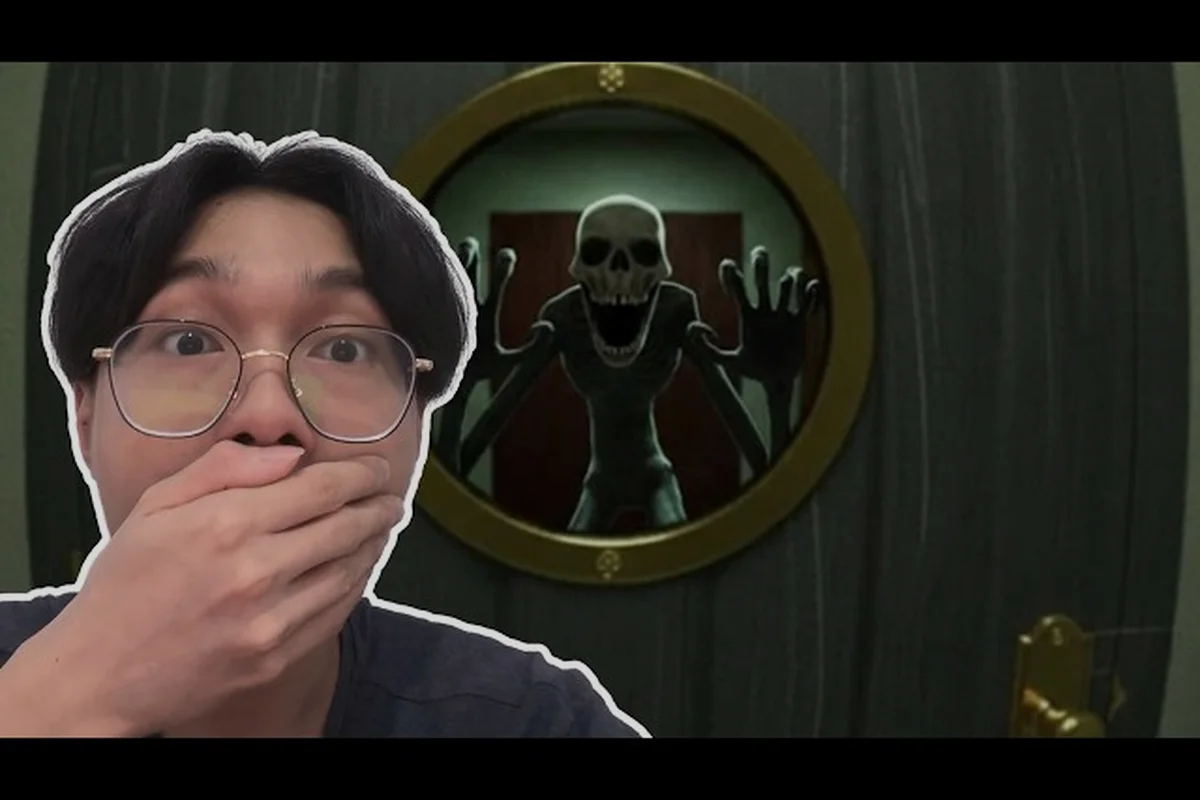
One of the most reliable anomaly indicators reported by players is a face pressed directly against the camera lens, which distorts the image and creates a visual glitch that is unmistakable once you know what to look for. This tell appears in multiple walkthrough videos, including the full game playthrough by AnyaRoblox, and it signals that whatever is outside knows you are watching.
Another camera-only tell involves missing evidence, where something that should be visible in the frame simply isnt there anymore when you cycle back to that feed. Players report seeing a figure in the hallway, switching to the exterior camera for a moment, and then returning to find the hallway completely empty, which should never happen if the person was genuinely waiting to knock.
Hidden Night Vision Adjustments for Anomaly Tells
The night vision mode on your camera system is not just a convenience for dark hallways; it is a tool that reveals entire categories of anomalies that never appear under normal lighting. Community data suggests that certain entities only become visible when you switch to infrared, meaning that a hallway which looks perfectly clear in standard mode might contain a lurking threat in night vision.
Players who have tested this extensively report that figures appearing only in night vision are among the most dangerous anomalies, because they give you no warning in the standard feed. If you never toggle that mode, you will walk right into a trap that was visible the entire time, which is why the night vision guide breaks down each entity type and its visibility requirements.
The game also uses camera static and glitches as environmental storytelling, with feed disruptions signaling that an anomaly is nearby even before it appears on screen. When you see static creeping into the corners of your monitor, treat it as an early warning system and prepare yourself for whatever is about to happen.
Face-Pressed-to-Lens Encounters
The face pressed to the lens phenomenon deserves special attention because it is the most commonly reported camera-only tell across all community discussions. This anomaly appears as a distorted, oversized face filling the entire frame, often accompanied by audio distortion that makes it impossible to hear the knocks clearly.
According to player reports on Reddit, this tell is almost always a hostile entity, and responding to its knock typically results in death. The safest response is to simply not answer, because the game does not penalize you for ignoring a knock from a confirmed anomaly, though you will need to wait for the entity to leave before normal activity resumes.
How to Use the Camera System Before Every Knock
Developing a pre-knock camera routine is the single most impactful habit you can build, because it transforms your reaction from panic to procedure. The keep the door locked camera tips that experienced players swear by all boil down to creating a checklist that you run through every single time someone knocks, without exception.
When you hear that first knock, your instinct will scream at you to check the peephole or open the door, but you must override that impulse and pull up the monitor instead. Start by checking the hallway feed to confirm whether someone is actually standing there, then cycle to the exterior camera to see if there are multiple figures approaching.
The camera system overview covers the full technical breakdown, but the practical routine is surprisingly simple: look, verify, decide. If the hallway is empty but the knocking continues, you are dealing with an anomaly that is invisible to the camera, which means you should not answer.
Your Pre-Knock Checklist
| Step | Camera Action | What to Look For |
|---|---|---|
| 1 | Pull up monitor immediately | Any static or glitch in the feed |
| 2 | Check hallway camera | Person present or empty corridor |
| 3 | Toggle night vision | Figures only visible in infrared |
| 4 | Check exterior camera | Multiple figures or approaching threat |
| 5 | Verify identity | Normal guest or anomaly tells |
This checklist takes less than five seconds to complete once you have practiced it, and that five-second investment can save you from a death that would otherwise end your entire run. Players who skip these steps report that their survival rate drops dramatically, because they are essentially answering doors blind.
The camera controls guide provides additional detail on button mapping and customization options, but the core routine remains the same regardless of your setup. Once you internalize this checklist, checking the cameras becomes as natural as breathing, and you will find yourself doing it even when no knock has occurred.
Camera Routines Built Around Anomaly Hunting
Once you have mastered the basics, you can move on to advanced keep the door locked camera tips that involve using the feed proactively rather than reactively. Instead of waiting for knocks, experienced players monitor the cameras continuously, building a mental map of the hallway and exterior that makes anomalies stand out immediately.
One advanced technique involves timed camera cycles, where you check each feed on a fixed schedule to establish a baseline of normal activity. Once you know what the hallway looks like under normal conditions, any deviation becomes instantly noticeable, even if you cannot immediately identify what is wrong.
Another strategy reported by veteran players is camera baiting, which involves deliberately making noise or movement to draw anomalies into camera view before they reach your door. This approach is riskier because it can attract multiple entities, but the information you gain often outweighs the danger, especially when you are trying to identify which visitors are safe.
Camera Feed Comparison Table
| Camera Feed | Best Use | Anomaly Risk | Response Priority |
|---|---|---|---|
| Hallway | Check before every knock | High | Always check first |
| Exterior | Monitor approaching threats | Medium | Check every 30 seconds |
| Interior | Watch for inside anomalies | Low | Check after lights flicker |
| Night Vision | Reveal hidden entities | Very High | Toggle when lights cut |
The keep the door locked cctv system rewards players who treat it as a living tool rather than a passive observation screen. Every time you cycle through feeds, you are gathering intelligence that can mean the difference between a successful shift and a sudden, unexplained death.
The Static Warning System
Camera static is not random noise; it is a deliberate game mechanic that signals anomaly proximity according to community testing. When you see static creeping into your feed, an anomaly is nearby, and the intensity of the static often correlates with how close the threat has gotten.
Players who study this pattern report that heavy static typically means the anomaly is right outside your door, while light static suggests it is still approaching from the exterior. Learning to read this gradient gives you extra seconds to prepare, which can be crucial when dealing with fast-moving entities.
The survival tips guide includes additional strategies for managing these situations, but the core principle is simple: static is your friend, because it warns you before the knock ever comes. In practice, this means staying near a radio or TV during quiet phases, as the static crackle gives you a crucial second to barricade or hide. Many players find that trusting the static over visual cues drastically reduces panic deaths, especially when the entity mimics footsteps.
Camera Mistakes That Get Players Killed
Even experienced players make camera-related mistakes that cost them their runs, and identifying these errors is just as important as learning the correct techniques. The keep the door locked camera tips reddit community has documented the most common fatal errors, and they all share a common theme: players either ignore the cameras entirely or misinterpret what they see.
The first major mistake is checking the peephole instead of the camera, which is fatal because the peephole does not reveal the same information as the camera feed. Some anomalies are invisible through the peephole but clearly visible on the monitor, meaning you could be looking directly at a threat and have no idea it is there.
Another common error involves answering too quickly after checking the camera, without giving yourself time to process what you saw. Players who spot an anomaly but then answer anyway, either out of panic or habit, are essentially throwing away the information they just gathered.
Common Camera Mistakes Comparison
| Mistake | Why It Happens | Why It Kills You | Better Approach |
|---|---|---|---|
| Skipping camera check | Panic or impatience | No anomaly information | Always check first |
| Peephole instead of camera | Habit from other games | Misses camera-only tells | Use monitor always |
| Ignoring static | Not understanding signal | No early warning | Treat static as alert |
| No night vision toggle | Forgetting the mode | Misses hidden entities | Toggle on every check |
| Slow camera cycling | Unfamiliar controls | Wasted precious seconds | Practice until smooth |
The good news is that all of these mistakes are fixable with practice, and the keep the door locked cameras system becomes second nature after just a few hours of play. The key is to treat every death as a learning opportunity and ask yourself what the camera showed you before you made the fatal choice.
How to Recover From a Camera Mistake
When you realize you have made a camera error, the worst thing you can do is freeze or panic, because that gives the anomaly time to reach your door. Instead, immediately pull up the monitor and assess the situation, even if you have already heard the knock.
If the camera confirms an anomaly, simply do not answer the door and wait for it to leave. If the camera shows a normal guest, you can answer with confidence, though you should still stay alert for any sudden changes in behavior.
Frequently Asked Questions
What is the most important keep the door locked camera tip for beginners?
The most critical tip is to always check the hallway camera before answering any knock, because the feed reveals anomalies that are completely invisible through the peephole. Treat this as a mandatory habit rather than an optional step, since it dramatically reduces your death rate from the very first shift.
How do I spot anomalies using the keep the door locked cameras?
Look for camera-only tells such as faces pressed against the lens, missing evidence when you cycle back to a feed, and figures that only appear in night vision mode. Static and glitches in the feed also indicate that an anomaly is nearby, so treat any visual disruption as a warning sign.
Does night vision actually help with the keep the door locked cctv system?
Yes, night vision reveals entities that are completely invisible in standard mode, making it essential for spotting certain anomaly types. Always toggle night vision during your pre-knock checklist, especially when the lights cut out or when you are checking dark corners of the hallway.
What should I do when I spot an anomaly on the camera?
Do not answer the door, because engaging with a confirmed anomaly typically results in death. Wait for the entity to leave, which usually happens within a minute, and use that time to check all of your camera feeds for any additional threats that might be approaching.
Are there any camera tips from the keep the door locked camera tips reddit community?
The community recommends a fixed camera routine every time, as consistency prevents panic-driven mistakes. Practice cycling your cameras in under five seconds, since faster checks give you more reaction time. This habit pays off, as players who use feeds consistently survive longer and see more of the game.