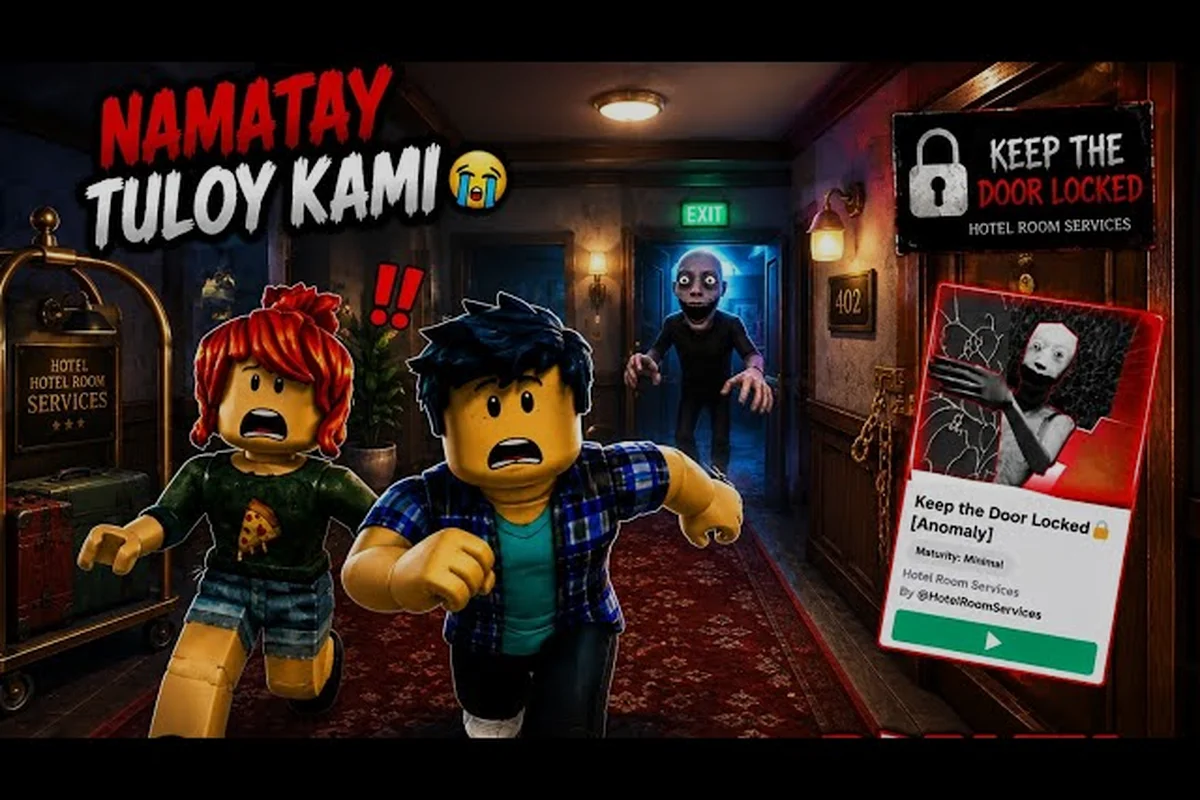
You check the monitor, cycle through the hallway feeds, and try to figure out who is actually standing on the other side of the door. The Keep the Door Locked cameras explained system is your only lifeline in this Roblox horror experience, because every stranger who knocks could be lying about who they are. Since the game launched on May 28, 2026, it has pulled in over 4.3 million visits with more than 10,000 players online at peak times, and the camera system is the core mechanic that separates survivors from victims.
The security camera network gives you a window into the hallway and exterior before you ever touch the doorknob, which means the difference between a safe interaction and a fatal mistake comes down to how well you read the feeds. This guide breaks down every camera function, every anomaly tell you can spot through the lens, and the exact routines that veteran players use to stay alive through the night.
How the Camera System Shapes Your Survival Chances
Every knock on your hotel room door forces a decision, and the Keep the Door Locked cameras give you the only reliable evidence you can use to make that call. When you pull up the monitor, you can cycle through different camera views, toggle night vision for dark hallways, and check both the corridor and the exterior before you respond to anyone.
The camera system matters because the game punishes guesswork. According to player reports, a single wrong decision can end your run instantly, and there is no second chance once you unlock that door. The CCTV feeds show you what the stranger looks like, how they behave, and whether something about the scene feels off, which is why learning to interpret those images matters more than any other skill in the game.
Here is what the camera interface gives you on every shift: a live feed of every room, door, and hallway, letting you track movement without leaving the office. Players rely on it to spot anomalies early, but remember—each camera view drains a small amount of power, so use it sparingly to keep the lights on and the doors locked.
-
Cycle views to switch between the main hallway, side corridor, and exterior entrance
-
Toggle night vision when the lights cut out or the hallway goes dark
-
Check hallway and exterior before answering any knock to verify the scene
-
Spot camera-only tells that reveal anomalies, like faces pressed to the lens or figures that only appear in infrared
The camera system is not just a convenience, it is the entire information layer that the game builds its tension around. If you want the full breakdown of every button and menu option, the camera controls guide walks through the interface in detail.
Reading the Feeds: Camera Views and What They Reveal
The Keep the Door Locked CCTV network covers multiple angles, and each view gives you different information about what is happening outside your room. The main hallway camera is your primary feed, showing the full corridor leading to your door, while the side corridor camera catches anyone approaching from the stairwell or elevator.
The exterior camera is the one that most new players ignore, but it often reveals the most important clues. When someone claims to be a guest who lost their key or a staff member who needs to check the room, the exterior feed lets you verify whether a vehicle is parked outside, whether the weather matches their story, and whether other figures are lurking in the shadows.
IR Signatures Only Visible in Night Vision
When the power flickers or the hallway lights go out, the standard camera feed becomes nearly useless. That is when you need to switch to night vision mode, which uses infrared to illuminate the scene in that familiar green glow. The night vision toggle is a single button press, and it can reveal things that the normal feed completely hides.
Players have reported that some anomalies only appear in night vision or infrared, meaning a hallway that looks empty in standard mode can suddenly show a figure standing perfectly still when you flip the switch. This makes the night vision toggle an essential part of your routine, not an optional feature. For a deeper dive into when and how to use this mode effectively, check out the night vision camera tips article.
The table below breaks down what each camera view is best for: first-person for precise peeking around corners, third-person for spotting threats while moving, and the overhead view for monitoring the door from a safe distance. Players often switch to first-person when hiding under beds, as it reduces motion sickness during long waits, while third-person helps you track the killer’s approach without exposing your position.
| Camera View | Primary Use | Key Details to Watch |
|---|---|---|
| Main Hallway | Identify who is knocking | Face, posture, visible hands, body language |
| Side Corridor | Catch approaching figures | Movement speed, hesitation, second figures |
| Exterior | Verify the story | Vehicles, weather, additional people |
| Night Vision | Detect hidden anomalies | Figures only visible in infrared, glowing eyes |
Unmissable Camera-Exclusive Signals
The most valuable skill you can develop is recognizing the anomaly tells that only appear on camera. These are the clues that the game hides in the feeds, and they are the difference between opening the door for a real guest and letting in something that should have stayed outside.
According to community testing and walkthrough videos, the camera system reveals several specific tells that players have documented across hundreds of shifts. The most common ones appear consistently enough that you can build a reliable checklist around them, such as a flickering light or a door slightly ajar. Veteran players often pause on these cues to avoid wasting battery, since checking every room blindly drains resources fast.
Lens-Pressed Face Sightings
One of the most disturbing tells reported by players is a face pressed directly against the camera lens. When you cycle to a camera view and see a face filling the entire frame, with distorted features pressed against the glass, that is an anomaly that should never be allowed inside. Normal guests stand at a natural distance from the camera, so a face that close to the lens is an immediate red flag.
Missing Evidence and Scene Inconsistencies
Another camera-only tell involves missing evidence. If a stranger claims they just arrived by car but the exterior camera shows an empty parking lot, that is a contradiction you can catch before opening the door. Similarly, if someone says they are a staff member but the hallway camera shows no maintenance cart, no uniform details, and no radio equipment, the story does not hold up.
The table below summarizes the most reliable camera-only tells that players have documented, focusing on subtle visual shifts rather than audio cues. For instance, a slight static flicker or a door frame bending inward often signals an imminent breach, even when the killer is out of view. Veterans recommend pairing these tells with a quick glance at the HUD, as the camera angle can obscure movement that the minimap still catches.
| Anomaly Tell | What It Looks Like | Confidence Level |
|---|---|---|
| Face pressed to lens | Distorted face filling the frame | Very High |
| Figure only in night vision | Empty in standard mode, present in infrared | Very High |
| Camera static and glitches | Feed cuts out or shows interference near anomaly | High |
| Missing evidence | Story contradicts camera footage | High |
| Second figure in shadows | Someone else waiting out of view | Medium |
Camera Static and Glitches
Players have also reported that camera static and glitches signal an anomaly nearby. When the feed starts cutting out, showing interference lines, or flickering between views on its own, something is interfering with the signal. This usually means an anomaly is close to the camera or moving through the area, so you should be extra cautious before responding to any knock that follows.
Building a Camera Check Routine That Saves Your Life
Knowing what to look for is only half the battle, because you also need a consistent routine that forces you to check every feed before every interaction. The Keep the Door Locked cameras explained system only helps you if you actually use it properly, and that means building a habit that covers every camera view before you make a decision.
The routine below is based on what experienced players recommend and what walkthrough videos demonstrate. It prioritizes timing your door checks to the audio cues, especially after the lights flicker, since that signals an imminent threat. Many veterans also advise keeping a flashlight ready but unlit, as its beam can reveal your position to the entity.
-
Check the main hallway first to identify who is knocking and assess their body language
-
Cycle to the side corridor to make sure no one else is approaching or waiting
-
Toggle night vision to catch any figures that only appear in infrared
-
Check the exterior feed to verify the story the stranger is telling you
-
Look for static or glitches in the feed that might indicate an anomaly nearby
This five-step check takes about ten seconds, and it gives you the information you need to make an informed decision. Players who skip steps in this routine are the ones who end up opening the door for the wrong person, because they missed a tell that was right there on the screen.
The table below shows how the routine maps to different knock scenarios, clarifying which door patterns trigger a threat versus a harmless visitor. Players should consult it when deciding whether to open, as mistiming a response to a heavy knock often leads to a jump scare. Community guides frequently reference this chart to optimize survival during late-night rounds.
| Knock Scenario | Critical Camera Check | Decision Signal |
|---|---|---|
| Guest claims lost key | Exterior feed for vehicle | No car = suspicious story |
| Staff needs to check room | Hallway for uniform and equipment | No cart or radio = anomaly |
| Someone asks for help | Side corridor for second figure | Hidden figure = do not open |
| Friend claims to know you | Night vision for infrared tell | Figure only in IR = anomaly |
| Late night maintenance | Static and glitches check | Feed interference = danger |
Camera Discipline for the Deep-Night Hours
Once you have the basic routine down, you can start layering in more advanced strategies that veteran players use to survive the hardest shifts. These techniques involve combining camera information with audio cues, timing your checks around power outages, and using the camera system to track anomalies as they move through the hotel.
One advanced strategy involves watching the camera feeds continuously rather than only checking when someone knocks. Anomalies sometimes appear in the hallway before they knock, pacing back and forth or standing motionless outside your door. If you catch this behavior on camera, you already know what is coming and can prepare accordingly.
Another technique reported by players is using the exterior camera to track arrival patterns. If you see a car pull up and someone get out, you can time their walk from the parking lot to your door. If the knock comes too quickly after the car arrives, that means the person either ran or the story does not add up, both of which are suspicious signals.
For players who want to understand the full camera system architecture, the camera system overview provides a comprehensive breakdown of how all the feeds connect and what the developer intended with the design. This includes how each monitor’s feed switches during power outages, a mechanic that forces players to rely on audio cues and door checks. Many veterans note that mastering this layout is key to predicting the entity’s movement patterns.
Here are additional advanced tips that experienced players share: prioritize listening for audio cues over visual checks, as footsteps and door creaks often reveal the entity’s position before it appears on camera. Also, stagger your camera checks between rooms to avoid blind spots, and always keep a flashlight ready for sudden power outages—these small habits can mean the difference between a clean escape and a jump-scare restart.
-
Keep night vision on during power flickers because anomalies often move during the confusion
-
Cycle cameras in a fixed order every time so you never skip a feed out of habit
-
Mute the game audio briefly to check if the camera hum changes, which some players report indicates proximity
-
Trust camera evidence over voice lines because anomalies can mimic voices but cannot always mimic visual details
Frequently Asked Questions
How do I access the cameras in Keep the Door Locked?
You access the camera system by interacting with the monitor near your hotel room door. This pulls up the CCTV interface, where you can cycle through the main hallway, side corridor, and exterior views. You can also toggle night vision from this same screen, and the controls are consistent across all shifts.
What is the most reliable camera tell for spotting anomalies?
The most reliable tell reported by players is a face pressed directly against the camera lens, because normal guests never get that close to the security cameras. Figures that only appear in night vision mode are a close second, since the infrared feed reveals things that the standard camera cannot detect.
Can anomalies disable the camera system?
Yes, players have reported that camera static and glitches often appear right before an anomaly makes its move. The feed may cut out, show interference lines, or flicker between views on its own. When you see this behavior, treat it as a warning that something dangerous is nearby and be extra cautious.
How often should I check the cameras during a shift?
You should check the cameras continuously, not just when someone knocks. Anomalies sometimes appear in the hallway before they approach your door, and catching them early gives you a significant advantage. The most successful players keep the monitor open and cycle through feeds regularly throughout the night.
Does night vision drain battery or have a cooldown?
Night vision in Keep the Door Locked does not drain battery or have a cooldown. You can use it freely without worrying about resource management or timing restrictions. This makes it a reliable tool for scanning dark areas, though it does not reveal hidden anomalies that require careful observation.