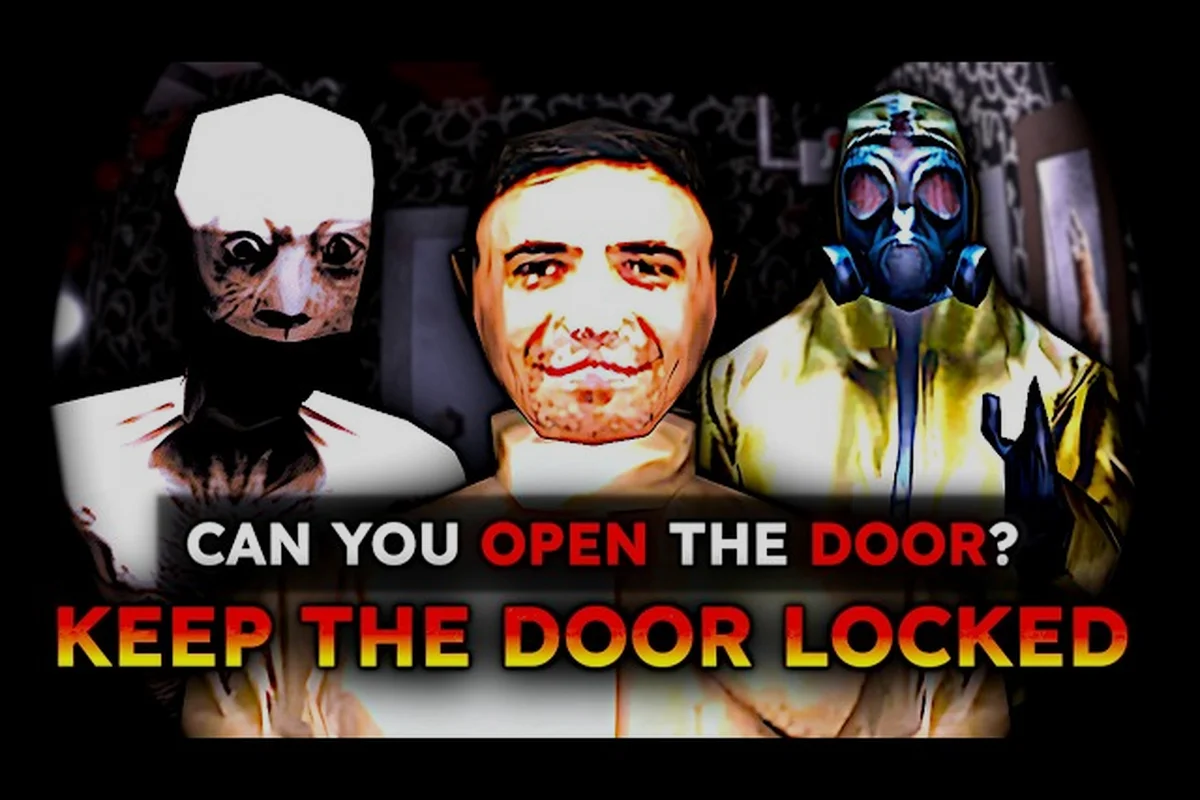
The hotel hallway hums under fluorescent lights, and then the knock comes. Every visitor claims they belong inside, but only some of them are telling the truth, and one wrong decision ends your shift. Keep the door locked survive the night is the core loop of this Roblox horror experience from developer Hotel Room Services, and mastering it takes more than blind trust.
The game launched on May 28, 2026, and has already pulled in over 4.3 million visits with more than 10,000 players online at peak hours. You sit alone in a hotel room after midnight, watching camera feeds, following rules, and deciding who gets through the door. Some strangers genuinely need help. Others are anomalies wearing familiar faces. This guide breaks down the survival mechanics, the verification routines, and the exact habits that separate a perfect night from a premature game over.
The Core Loop of Surviving Night After Night
Every shift in Keep the Door Locked follows the same rhythm: a knock interrupts the silence, a visitor speaks through the intercom, and you have seconds to decide whether they belong on the other side of the door. The tension comes from the fact that the rules shift between nights, and what worked on shift three might get you killed on shift seven. Understanding this loop is the foundation of surviving night after night, because the game actively tests whether you are adapting or autopiloting.
The camera system is your first line of defense. Before any knock, you can scan the hallway feed to see who is approaching, but anomalies have learned to manipulate what the cameras show. According to community reports, some entities appear perfectly normal on the monitor while their voice reveals distortion on the intercom, which means visual confirmation alone is never sufficient.
Your sanity meter quietly ticks down with every suspicious encounter, and letting it bottom out triggers auditory hallucinations that make the game nearly impossible to read. Players who keep the door locked survive the night more consistently when they treat sanity management as seriously as door decisions, because a clear head catches the subtle clues that a panicked one misses.
The night progresses in waves, with each visitor arriving on a semi-randomized schedule that keeps you guessing. You can check the clock, review camera feeds, and prepare the door between knocks, but you cannot predict exactly who will show up next. This unpredictability is why the pre-knock routine matters so much, since it gives you a consistent baseline for evaluating whoever appears.
Pre-Knock Rituals for a Steady Night
The most reliable Keep the Door Locked tips all circle back to one idea: do the same thing before every single knock. A consistent routine removes the panic response that gets players killed, because your brain stops scrambling and starts checking boxes. The community has converged on a three-step sequence that covers the essentials, and it takes about fifteen seconds to complete.
Scanning the Camera Feeds
Your first move when the knock sounds is to check every camera feed, not just the one facing your door. Players report that anomalies sometimes appear in neighboring hallways first, giving you a preview of who is walking toward you. If the feed shows static or a figure that flickers, treat that as a warning sign and prepare for a more careful verification.
Checking the Intercom Voice
The intercom is your most reliable tool because voice anomalies are harder to fake than visual ones. Listen for pitch shifts, robotic undertones, delayed responses, or any moment where the voice seems to be mimicking rather than speaking. Some visitors answer questions too quickly, as if they rehearsed, while others pause in ways that feel unnatural.
Prepping the Door State
Before you even decide to open, make sure the chain lock is engaged and the peephole cover is clear. If you need to deny entry, you want to do it without hesitation, and if you need to open, you want to do it smoothly. Hesitation at the door is the most common death cause reported by players, because anomalies punish delays.
| Routine Step | Time Cost | Primary Purpose | Failure Consequence |
|---|---|---|---|
| Camera sweep | 5-7 seconds | Detect approaching figures | Missing visual anomalies |
| Intercom voice check | 4-6 seconds | Verify voice authenticity | Trusting mimicked speech |
| Door prep | 2-3 seconds | Enable fast response | Slow reaction to knock |
| Rule recall | 3-5 seconds | Remember night-specific rules | Applying wrong verification |
Listening for Visitor Truth Before You Open
The heart of Keep the Door Locked survival is the verification system, which changes how you evaluate each visitor. Some nights require you to ask a specific question, while others demand you check for a physical marker on the camera feed. The game deliberately withholds the verification method until the night begins, so you need to read the room description carefully before the first knock arrives.
Rule-Based Verification
Your room contains a rules sheet that updates each night, and it tells you exactly what to check. One night might require asking for a room number, while another demands checking whether the visitor casts a shadow on the camera. Rule-based verification is the safest approach because it gives you a concrete checklist, and you should memorize the current night's rules as soon as the shift starts.
Behavioral Verification
When the rules are unclear or you have a hunch, watch how the visitor behaves. Legitimate visitors tend to show consistent emotions, while anomalies often overact or underreact. A visitor who seems relieved when you hesitate might be an anomaly that wants you to open before you finish checking.
Voice Cross-Reference
Some visitors claim to be hotel staff, and the game gives you a staff directory to cross-reference voices. If the intercom voice does not match the listed staff member, that is an automatic denial. Players who use this method report significantly higher survival rates, because voice cross-referencing catches mimicry that visual checks miss.
| Verification Type | What to Check | Trust Level | Common Anomaly Tell |
|---|---|---|---|
| Rule sheet | Night-specific instruction | Highest | Visitor contradicts the rule |
| Staff directory | Voice vs. listed staff | High | Voice mismatch |
| Camera shadow | Physical presence | Medium | Missing or double shadow |
| Behavioral cues | Emotional consistency | Medium | Overacting or flat affect |
Managing Sanity to Survive Longer
Your sanity meter is the hidden timer that determines how long you can keep playing before the game becomes unfair. Every denied visitor costs a small amount of sanity, but letting in an anomaly costs a massive chunk. Keep the door locked survive longer by treating sanity as a resource to conserve, not a bar to ignore.
Sanity regenerates slowly between knocks, but the rate is not fast enough to recover from major mistakes. Players who deny too many visitors find themselves in a spiral where their hallucinations cause more mistakes, which costs more sanity. The solution is to verify carefully enough that you deny fewer legitimate visitors while still catching every anomaly.
The hallucinations that kick in at low sanity are the real danger. You might hear knocks that are not real, see figures on camera that are not there, or receive intercom messages that never came. These false signals force you to burn sanity checking phantom threats, which accelerates the downward spiral. According to community testing, keeping sanity above fifty percent prevents most hallucinations, so prioritize sanity preservation over aggressive verification.
| Sanity Level | Effect | Recommended Action |
|---|---|---|
| 80-100% | Clear perception | Normal verification routine |
| 50-79% | Minor visual noise | Double-check camera feeds |
| 25-49% | Occasional hallucinations | Minimize door openings |
| 0-24% | Constant false signals | Survival becomes luck-based |
Advanced Tricks for a Flawless Night
The difference between surviving and achieving a perfect night comes down to efficiency and risk assessment. A perfect night means zero anomalies admitted and zero legitimate visitors turned away, which requires reading every visitor correctly. Veterans report that the key is to categorize visitors quickly using a mental triage system.
Triage by Visitor Type
Some visitors are always safe, while others are always anomalies, and the rest fall into a gray zone. Learning to spot the obvious cases quickly saves your sanity for the hard calls. For example, visitors who match the staff directory and follow the night's rules are almost always legitimate, while visitors who refuse to answer questions are almost always anomalies.
Minimizing Door Openings
Every time you open the door, you risk an anomaly slipping through. Even with verification, there is a small chance of misreading a visitor. Minimizing door openings reduces your exposure to that risk, so only open when the verification is unambiguous. If you have any doubt, keep the door locked and eat the sanity cost.
Learning Anomaly Patterns
The game's anomalies have repeating tells that veterans learn to spot. Some always stumble on specific words, while others hesitate at the same point in every conversation. Watching full walkthroughs, like the Keep the Door Locked full walkthrough by Josh Plays, helps you internalize these patterns faster than trial and error.
For players who want a deeper breakdown of the verification mechanics, the Keep the Door Locked how to survive guide covers the fundamental decision framework in more detail. If you are looking for the highest-leverage habits, the Keep the Door Locked best tips article ranks the strategies by impact.
Preparing for the Next Night
Surviving one night is an achievement, but the game keeps pushing you forward with the promise of new content around the corner. Each successful night unlocks something new, whether it is a different room layout, a new anomaly type, or a harder rule set. Keep the door locked next night requires you to carry lessons forward while staying flexible enough to handle fresh challenges.
The game's progression system rewards consistent survival rather than occasional heroics. Players who survive three consecutive nights report seeing new visitor types, and the difficulty curve ramps up noticeably after night five. This is where the keep the door locked survive the night mindset shifts from reactive to proactive, because you start predicting what the game will throw at you.
Between nights, review your performance and identify which verification failures cost you. Did you trust the camera too much? Did you hesitate on a clear anomaly? These self-assessments matter more than any single tip, because they turn your personal mistakes into reference points for the next shift.
For a comprehensive look at the daily habits that keep you alive, the Keep the Door Locked survival tips guide collects the community's most tested advice. Players on the official Keep the Door Locked Roblox page frequently share their own strategies, and watching anomaly gameplay footage by JunyyGaming shows how experienced players handle the pressure of late-night shifts.
Frequently Asked Questions
What is the most common mistake that ends a run?
The most common mistake is opening the door before completing the full verification routine. Players get impatient or trust the camera feed alone, and anomalies exploit that haste. Always finish the intercom check and rule recall before touching the door handle.
How do I recover from low sanity?
Sanity regenerates slowly between knocks, but the best recovery strategy is to stop opening doors unless absolutely certain of the visitor. Every unnecessary denial costs sanity, so conserve your meter by verifying thoroughly and accepting that some visitors will remain ambiguous.
Can I survive without opening the door at all?
Yes, but only for a limited time. Refusing every visitor keeps you safe from anomalies but drains sanity until hallucinations make the game unplayable. The intended strategy is to verify carefully and open only for confirmed legitimate visitors, as prolonged isolation inevitably leads to failure.
Do the rules change every night?
Yes, the rule sheet updates each shift, and the verification method changes accordingly. One night might require a specific question, while another demands a visual check. Always read the rules at the start of every shift, because applying yesterday's rules will get you killed.
What happens after a perfect night?
A perfect night unlocks bonus content and accelerates progression to new visitor types and room layouts. The game rewards flawless performance with faster content unlocks, though exact rewards may vary by update version. This encourages players to refine their strategy for maximum efficiency each shift.