The keep the door locked all rules system is the difference between surviving until sunrise and becoming another hotel room statistic. This complete rulebook breaks down every mechanic you need to master, from camera protocol to visitor verification, so you can make the right call when strangers knock after midnight. If you are brand new, start with the survival guide to learn the core loop first.
Since launching on May 28, 2026, the game has attracted over 4.3 million visits with more than 10,000 players online at peak hours, according to the official Roblox page. That popularity means thousands of new players are learning these rules the hard way every night. This guide compiles the complete keep the door locked rules framework that experienced players use to survive consistently, whether you are facing your first night or your fiftieth.
The Complete Rulebook for Hotel Guests
The core keep the door locked rulebook revolves around five non-negotiable rules that govern every interaction in the hotel. Understanding these rules is not optional—each one exists because breaking it can end your run instantly. Community testing has confirmed that these rules apply across all current versions of the game, though exact consequences may shift slightly with updates.
Here is the complete keep the door locked rules framework that every player must internalize: it governs every action from door repairs to flashlight usage, and ignoring even one rule often triggers an instant game-over. Veterans recommend memorizing the priority order—lock first, then listen for footsteps—since the monster’s audio cues shift unpredictably after the first minute, making silent, rule-abiding play the only consistent survival strategy.
-
Always check the cameras before opening the door — the monitor reveals what the visitor looks like and whether they match the room's expectations
-
Keep the door locked unless you are certain the visitor is safe — uncertainty is a valid reason to refuse entry
-
Watch the monitor because anomalies reveal themselves on camera — visual glitches, wrong clothing, or missing features are your only warning
-
Verify every claim against the room first — if a visitor says they left something inside, check the room before believing them
-
When in doubt, turn the visitor away — a wrong refusal costs less than a wrong admission
Each rule feeds into the game's sanity system, which acts as your health bar for the night. Every broken rule drains sanity, and when it hits zero, the night ends badly regardless of how many hours remain until morning — learn the full mechanics in our sanity system guide. The complete keep the door locked rules framework treats sanity as a resource to protect, not a score to maximize.
How the Sanity System Enforces the Rules
The sanity system is the enforcement mechanism behind the keep the door locked rulebook. Every mistake costs a specific amount of sanity, and the penalties stack quickly if you make multiple errors in a single night. According to community reports, the game tracks both visible and hidden sanity penalties, meaning some rule breaks punish you immediately while others accumulate silently.
| Rule Violation | Sanity Cost | Visible Warning |
|---|---|---|
| Opening without camera check | High | Screen distortion |
| Admitting an anomaly | Critical | Loud static burst |
| Ignoring camera evidence | Medium | Flickering lights |
| Refusing a safe visitor | Low | Subtle whispering |
| Repeated violations | Escalating | Visual hallucinations |
The table above reflects community-observed values as of August 2026, and exact numbers may vary by game version. What matters more than the precise values is the pattern: camera checks are cheap insurance while admitting anomalies is the fastest way to lose a run.
Camera Protocol: Your Primary Defense
The camera system is the backbone of the keep the door locked rules because it gives you information before you commit to opening the door. Every visitor who knocks appears on the monitor first, and that brief window is your only chance to evaluate them safely — a full breakdown of views and toggles is in our camera guide. Players who skip this step are essentially gambling with their sanity, and the house always wins in the long run.
The camera reveals several critical details about each visitor, and learning to read them quickly is the difference between a smooth night and a disaster. Experienced players develop a checklist routine that takes less than five seconds per knock, which keeps them efficient without sacrificing safety.
What the Camera Reveals About Visitors
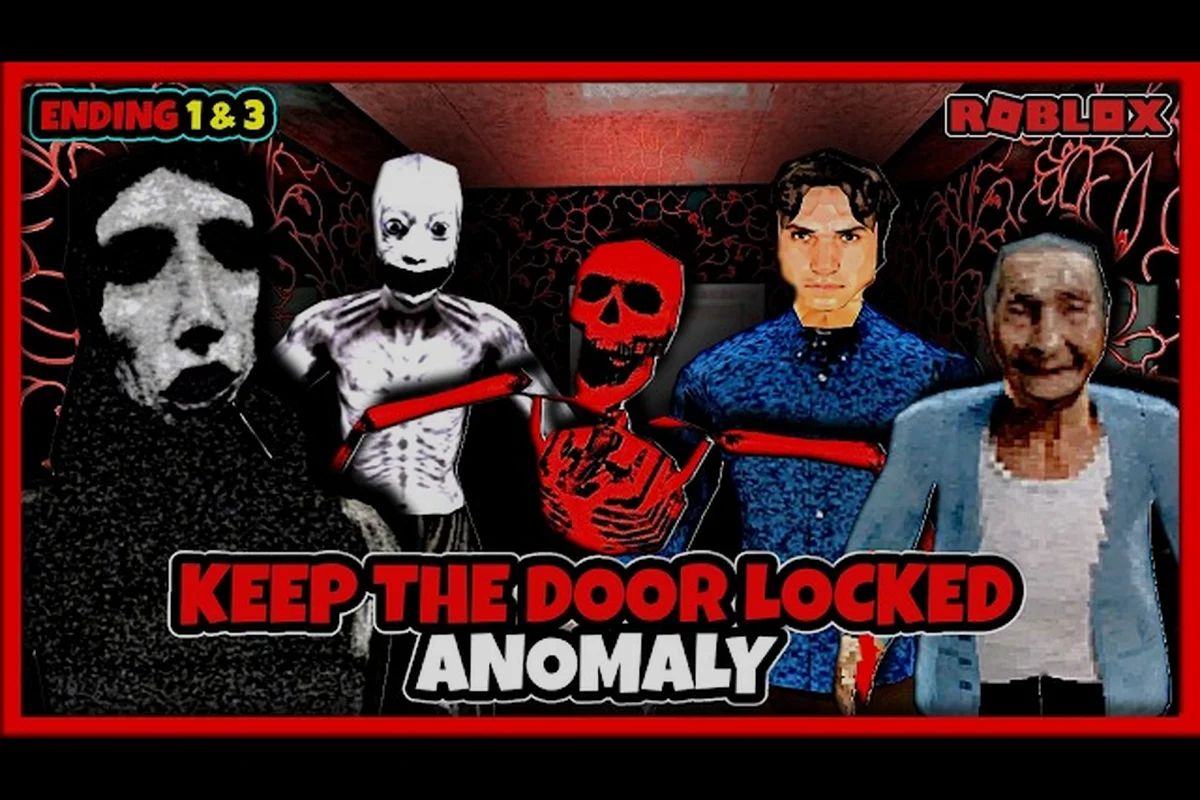
The monitor displays the visitor standing in the hallway, and anomalies typically manifest as visual inconsistencies. Community testing has identified the most common tells that appear on camera, such as a shifted shadow or a flickering frame, which players use to decide whether to keep the door locked. Though the game may introduce new anomaly types with future updates, these baseline tells remain the fastest way to verify a threat before opening.
-
Facial features — missing eyes, wrong eye color, or faces that do not match the voice
-
Clothing accuracy — uniforms that do not match the claimed profession or era
-
Movement patterns — unnatural twitching, floating, or frozen poses
-
Background details — shadows that move independently or hallway features that shift
Each of these tells appears consistently enough that players have documented them across multiple nights. The complete keep the door locked rules approach treats the camera as a truth-telling device — if something looks wrong on the monitor, it is wrong, and the door stays locked.
Building an Efficient Camera Check Routine
Speed matters because visitors grow impatient, and some anomalies become more aggressive if you take too long. However, rushing your camera check defeats the purpose entirely. The goal is a fast but thorough scan that covers all the critical details without wasting time.
| Check Step | What to Look For | Time Budget |
|---|---|---|
| Face scan | Eye symmetry, expression, skin texture | 1-2 seconds |
| Clothing scan | Uniform accuracy, color correctness | 1-2 seconds |
| Movement scan | Natural motion, appropriate pacing | 1-2 seconds |
| Background scan | Hallway consistency, shadow behavior | 1-2 seconds |
| Voice comparison | Match between voice and appearance | 1 second |
This five-step routine takes roughly seven seconds per visitor, which community data suggests is within the safe window for most encounters. Players who complete the full scan report significantly higher survival rates than those who make snap judgments based on one or two details.
Visitor Verification: Separating Truth from Lies
Not every visitor is an anomaly, but every visitor has a story, and some stories are traps. The keep the door locked rules emphasize verification over assumption because the game rewards players who check claims against observable reality. A visitor who says they left a bag in your room might be telling the truth, or they might be using that claim to get you to open the door.
The verification process starts with the camera but extends to the room itself. Some visitors make claims that you can check without opening the door, and doing so costs nothing while potentially saving your run. Since each camera sweep consumes precious time before the lock meter rises, prioritizing visual confirmation over audio cues is a common strategy among experienced players.
Common Visitor Claims and How to Verify Them
Visitors typically make one of several claim types, and each has a corresponding verification method. The keep the door locked rulebook treats these claims as testable propositions rather than statements of fact, meaning players must actively gather evidence—such as checking door timers or observing visitor behavior—before deciding whether to comply. This emphasis on verification often slows down decision-making, a trade-off many experienced players accept to avoid being misled by cleverly worded requests.
-
"I left something in your room" — check the room visually for the described item before responding
-
"I am hotel staff" — verify the uniform matches the claimed role and check for name tags
-
"I need help" — assess whether the situation matches the request and whether the visitor appears capable of the described need
-
"I know someone you know" — test the claim by asking for specific details that a real person would know
Each verification method takes only a few seconds, and the information gained is often decisive. According to player reports, false claims are more common than genuine emergencies, which means skepticism is the correct default stance. In practice, this makes checking the door camera or listening for footsteps before unlocking a cheap, life-saving habit, as one wrong call can instantly end a run.
What Wrong Decisions Cost You
Every decision carries a cost, but the costs are not symmetrical. Refusing a safe visitor costs a small amount of sanity, while admitting an anomaly can cost most of your sanity bar or end the run outright. This asymmetry is the mathematical foundation of the keep the door locked rules.
| Decision | If Visitor Was Safe | If Visitor Was Anomaly |
|---|---|---|
| Open the door | Small sanity gain | Critical sanity loss |
| Keep locked | Small sanity loss | No penalty |
| Verify first | No penalty | No penalty |
The table makes the optimal strategy obvious: verification dominates both alternatives. When you verify first, you eliminate the guesswork and make an informed decision. The keep the door locked rules framework exists precisely because the game rewards informed decisions over gut reactions.
Room Awareness: Your Hidden Advantage
The room itself contains information that can help you evaluate visitors, and the keep the door locked rules include several room-based checks that players often overlook. Your hotel room is not just a safe space—it is a verification tool that can confirm or contradict visitor claims.
Before responding to any knock, experienced players do a quick room scan to establish a baseline. This baseline becomes the reference point for evaluating visitor claims about the room and its contents. In practice, this means checking door positions, window states, and item placement—details that often shift subtly between knocks. A player who skips this scan risks being misled by a visitor’s vague description, turning a routine check into a fatal misjudgment.
Room Details That Matter for Verification
Certain room details directly support the verification process, and knowing them gives you an edge when visitors make claims about your space. For example, noting the exact position of furniture or wall cracks lets you cross-check their story against what you actually see, which is vital when a visitor insists they never left the hallway.
-
Item locations — knowing where your belongings are lets you spot false claims about missing items
-
Door state — confirming the door is locked before engaging with visitors prevents accidental openings
-
Room layout — understanding the space helps you check claims about items being left behind
-
Baseline sounds — knowing what the room normally sounds like helps you notice anomalies
The keep the door locked rulebook treats room awareness as a passive defense layer that works alongside active camera checks. Players who maintain strong room awareness report fewer surprises because they catch inconsistencies earlier, such as a door slightly ajar or a shadow shifting before the entity fully manifests. This habit effectively buys precious seconds, letting you pre-position near an exit or ready a flashlight without wasting a camera cycle.
Integrating Room Checks into Your Routine
Room checks do not require significant time, but they do require consistency. The most effective approach is to establish a baseline at the start of each night and then refresh that baseline between visitors when you have downtime. This prevents small changes—like a shifted chair or a slightly open closet—from being missed, especially during later nights when the entity’s behavior grows more erratic.
| Time Point | Room Check | Purpose |
|---|---|---|
| Night start | Full room scan | Establish baseline |
| Between visitors | Quick glance | Refresh mental map |
| After refusals | Verify door lock | Confirm security |
| Before answering | Item check | Support verification |
This integrated approach means you are never starting from zero when a visitor makes a claim about your room. The complete keep the door locked rules strategy treats every moment as an opportunity to gather information, and information is the currency that buys survival.
Advanced Rule Applications for Experienced Players
Once you have mastered the basics, the keep the door locked rules open up more sophisticated strategies that experienced players use to optimize their nights. These advanced applications do not replace the core rules—they refine how you apply them in specific situations.
The key insight is that the rules are not a checklist to complete but a framework for decision-making. Understanding why each rule exists lets you apply it flexibly without violating its spirit. In practice, this means prioritizing survival over strict obedience, such as knowing when to break line of sight rather than blindly following every instruction. Veterans often note that adapting to the door's behavior beats rote memorization.
Reading Anomaly Patterns Across a Night
Anomalies do not appear randomly—they follow patterns that observant players can track. Community testing suggests that anomaly frequency increases as the night progresses, and certain visitor types appear more often at specific hours. For example, early-game visitors like the Mailman tend to spawn before midnight, while rarer threats such as the Shadow become more common after 2 AM, rewarding players who memorize these windows to conserve sanity and plan door checks.
-
Early night — more genuine visitors, fewer anomalies, lower pressure
-
Mid night — balanced mix, more complex claims, increased tension
-
Late night — more anomalies, aggressive behavior, higher stakes
Players who track these patterns adjust their verification intensity accordingly, spending more time on camera checks as the night progresses. The keep the door locked rules support this adaptive approach because the core principles remain constant while the application shifts with conditions.
Handling Edge Cases and Unusual Visitors
Some visitors do not fit neatly into standard categories, and these edge cases test your understanding of the rules. The keep the door locked rulebook provides guidance for these situations, though the exact behavior may vary by version. For example, a visitor appearing during a power outage may bypass audio cues, forcing you to rely on visual patterns alone. Veteran players often note that testing these anomalies in solo mode reveals subtle differences in spawn timing across updates.
-
Silent visitors — those who knock but never speak require extra camera scrutiny
-
Repeated visitors — those who return after refusal may escalate or reveal new information
-
Urgent visitors — those who claim emergencies pressure you to act quickly, which is exactly when you should slow down
-
Familiar visitors — those who seem to know you may be testing whether you recognize them
Each edge case rewards a slower, more careful approach rather than a quick decision. The pressure these visitors create is part of the game's design, and resisting that pressure is the correct response. When the door rattles or a shadow lingers, players who pause to listen and observe often avoid triggering a fatal event, while those who rush to act frequently misread the cue and lose the round.
Frequently Asked Questions
What is the most important rule in the keep the door locked rulebook?
The most important rule is checking the cameras before opening the door, because it gives you the information needed to apply every other rule correctly. Without a camera check, you are making decisions blind, which dramatically increases your risk of admitting an anomaly and losing sanity.
How much sanity does a single mistake cost?
Sanity costs vary by violation type, but admitting an anomaly is the most expensive mistake and can cost most of your sanity bar in one event. Minor violations like refusing a safe visitor cost less, but repeated mistakes stack and can drain your sanity over the course of a night.
Can I survive without following every rule?
You can survive individual encounters without perfect rule adherence, but your survival odds drop significantly with each violation. The keep the door locked rules exist because the game punishes mistakes cumulatively, and even small errors add up across a full night.
Do the rules change between game versions?
The core rules remain consistent across versions, but exact consequences and anomaly behaviors may shift with updates. Community testing as of August 2026 confirms the fundamental framework remains intact. However, players should stay alert for developer-announced changes, as specific mechanics can be adjusted without altering the overall rule structure.
What should I do if I am unsure about a visitor?
When in doubt, keep the door locked and turn the visitor away. The small sanity cost of a wrong refusal is far better than the critical loss from admitting an anomaly. You can always verify more carefully on the next encounter, so prioritize safety over certainty.