
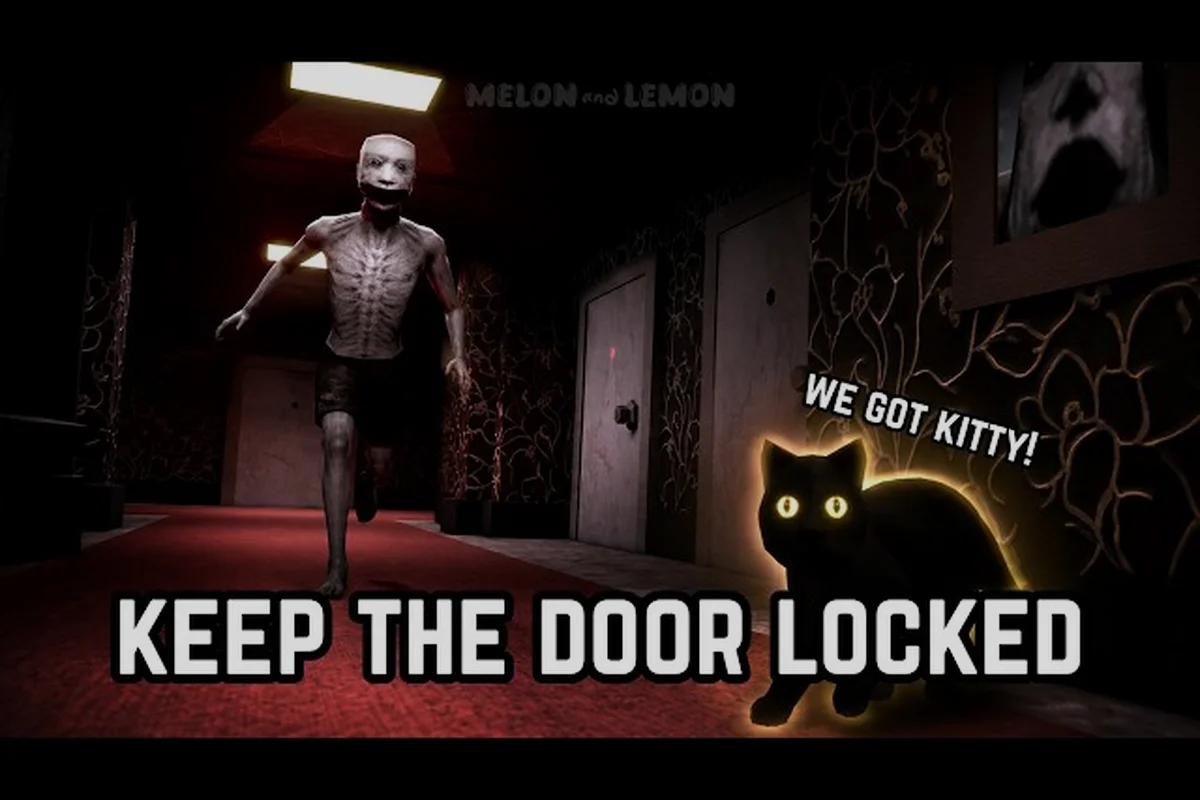
The keep the door locked rules guide exists because one wrong decision ends your shift permanently. This Roblox horror experience, launched May 28, 2026 by developer KivC under Hotel Room Services, has already drawn over 4.3 million visits with more than 10,000 players online at peak hours. Every knock on your hotel room door carries a life-or-death choice, and understanding the keep the door locked rules separates survivors from statistics. Discover the complete rulebook before your first visitor arrives.
Core Rules That Decide Survival
The foundation of survival rests on five non-negotiable principles that govern every interaction. Community testing and player reports confirm these keep the door locked rules apply consistently across all versions, though exact consequences may vary slightly depending on game updates.
-
Check cameras before opening: Never unlock the door without first reviewing the hallway monitor feed
-
Verify every claim: Cross-reference what visitors say against what the cameras actually show
-
Trust the monitor: Anomalies always reveal themselves on camera, even when they appear normal in person
-
Keep the door locked: When uncertainty exists, the safe choice is always to refuse entry
-
Protect your sanity: Breaking rules drains your sanity meter, and hitting zero ends the night permanently
The keep the door locked rulebook emphasizes that your sanity meter functions as both a health bar and a decision tracker. According to community data, each rule violation costs a significant chunk of sanity, while correct decisions restore small amounts. Players who maintain high sanity through proper rule adherence report encountering fewer aggressive anomalies in later nights.
Sanity management becomes the hidden currency of survival, because even minor mistakes compound over time. The game punishes reckless behavior through escalating anomaly aggression, making early rule mastery essential for progressing past the first few nights — our sanity system guide breaks down every drain and restore source. Players who ignore the flickering lights or skip checking the door’s peephole often find their sanity draining faster than expected.
Why Camera Checks Matter More Than Anything
The hallway monitor serves as your only reliable source of truth, and veteran players treat it as sacred. Every visitor who knocks appears on camera before they reach your door, giving you precious seconds to analyze their behavior. Camera verification reveals subtle tells that distinguish humans from anomalies, including unnatural posture, flickering shadows, and delayed movements that don't match audio cues — the same signals detailed in our anomaly tells guide.
Pattern recognition develops through experience, but beginners can start with basic checks like confirming the visitor matches their claimed identity. The keep the door locked rules guide recommends establishing a consistent camera routine before answering any knock, because rushing this step causes most early-game deaths.
Understanding Visitor Types and Their Behavior Patterns
Not every visitor wants to harm you, which creates the core tension of the game. The keep the door locked rules categorize visitors into distinct archetypes based on their requests and camera behavior, and recognizing these patterns quickly becomes second nature — see the full visitors guide for every archetype in detail.
| Visitor Type | Typical Request | Camera Behavior | Safe Response |
|---|---|---|---|
| Lost Guest | Directions to room | Normal posture, matching voice | Open door |
| Hotel Staff | Maintenance check | Uniform visible, carrying tools | Open door |
| Anomaly Mimic | Help or emergency | Distorted movement, wrong uniform | Keep locked |
| Aggressive Entity | Demands entry | Static interference, no reflection | Keep locked |
| Confused Elder | Forgot room number | Slow movement, confused speech | Verify then open |
Behavioral tells on camera provide the strongest signals for identifying threats. Anomalies often repeat the same phrase with slightly different intonation each time, while humans show natural variation in speech patterns. Audio-visual sync matters too, because anomalies frequently have mismatched lip movements or delayed reactions to your responses.
The keep the door locked rulebook notes that some anomalies intentionally mimic helpful visitors, which is why the camera check remains mandatory regardless of how innocent a request sounds. Players who skip verification because a visitor seems harmless often discover their mistake when the entity shifts form mid-conversation.
The Ice Cream Vendor Anomaly Case Study
One of the most documented anomalies in community reports involves an ice cream vendor appearing after midnight. According to player experiences shared across Roblox forums, this entity uses a cheerful tone and plausible story about delivering a late order, but the camera reveals missing shadow and cart wheels that don't rotate. The keep the door locked rules guide uses this example to illustrate why surface-level politeness never overrides camera evidence.
Verification protocols for this specific anomaly include checking whether the vendor's uniform matches the hotel's color scheme and confirming the cart's position matches the audio location. Players who follow the full verification sequence report successfully identifying this threat every time.
Rulebook Breakdown for Every Rule Category
The full keep the door locked rulebook extends beyond basic visitor screening into advanced protocols that experienced players use to maximize survival odds. These additional rules address edge cases and rare scenarios that catch unprepared players off guard, such as timing door re-checks during power outages or identifying silent visitor types. Veterans often memorize these clauses to avoid costly mistakes, turning the rulebook into a practical survival checklist rather than just a reference guide.
Rule enforcement mechanics operate on a tiered system, with minor violations costing less sanity than major ones. Community testing suggests that refusing entry to a genuine human costs minimal sanity, while opening the door to an anomaly costs significantly more. The game rewards cautious play, but over-caution carries its own penalty.
Timing windows add another layer of complexity, because some visitors only appear during specific night hours. The rulebook indicates that certain anomalies only manifest after 3 AM, while legitimate staff rarely visit after 2 AM. Tracking these patterns helps players make faster decisions when multiple knocks occur in quick succession.
| Rule Category | Violation Example | Sanity Cost | Recovery Method |
|---|---|---|---|
| Camera Protocol | Opening without monitor check | High | Correct decisions for 3 visitors |
| Verification | Trusting unverified claims | Medium | Complete a full verification cycle |
| Response Timing | Delaying response too long | Low | Maintain consistent response speed |
| Boundary Setting | Allowing repeated knocking | Medium | Firmly refuse and ignore further knocks |
| Information Sharing | Revealing room details | High | No recovery until next night |
Sanity recovery follows specific patterns that the rulebook documents, with correct decisions restoring small amounts and completing full nights providing larger bonuses. Players who understand these recovery mechanics can plan their risk tolerance around their current sanity level rather than playing purely reactively.
Advanced Rule Interactions and Edge Cases
Multiple visitors arriving simultaneously create complex decision points that test rule mastery. The keep the door locked rules guide recommends prioritizing camera checks for all visitors before responding to any, because anomalies sometimes coordinate attacks. Sequential verification becomes essential when dealing with group arrivals, and players should never open the door while other visitors remain unverified.
Environmental factors also influence rule application, with power outages disabling cameras and creating dangerous blind spots. The rulebook advises that during outages, players should keep the door locked regardless of visitor identity, because verification becomes impossible. Emergency protocols for these situations prioritize survival over helping legitimate visitors.
Practical Keep the Door Locked Rules Application Strategies
Knowing the rules matters less than applying them consistently under pressure. The keep the door locked rules guide translates theory into practice through structured routines that players can implement from their first night. For example, anchoring each rule to a specific sound cue or visual trigger helps maintain focus during the chaos of a hunt, while veterans often pair these routines with door-timing strategies to survive longer without panicking.
Step-by-step response protocol is essential for surviving the Entity’s unpredictable hunts. Players should first locate the nearest hiding spot, then turn off any flashlight to avoid detection, and finally hold still until the heartbeat fades. Practicing this sequence in the lobby reduces panic during actual chases, as timing mistakes often cost lives.
-
Acknowledge the knock verbally while moving to the monitor, which buys time and signals engagement
-
Scan the full hallway rather than focusing only on the visitor, because anomalies sometimes appear in peripheral areas
-
Cross-reference audio and visual by comparing what you hear with what the camera shows
-
State the verification question out loud, which helps maintain focus and provides a verbal checklist
-
Make the decision based on evidence, not emotion, and commit fully once chosen
-
Document the outcome mentally by noting which visitor types appeared and how they behaved
Routine development transforms these steps from conscious effort into automatic behavior, which matters because reaction speed directly impacts survival. Players who internalize the keep the door locked rules report making faster, more accurate decisions even during high-stress sequences with multiple visitors.
The keep the door locked rulebook also emphasizes emotional regulation, because panic leads to rushed decisions that violate protocols. Breathing exercises and consistent routines help maintain composure during intense moments, and experienced players often narrate their verification process aloud to stay grounded.
Building Your Personal Rule Framework
While the core keep the door locked rules remain constant, successful players develop personalized frameworks that adapt the rulebook to their playstyle. Risk tolerance assessment helps players determine how aggressively they verify visitors versus how quickly they respond, because some players prefer speed while others prioritize thoroughness.
Tracking systems prove valuable for identifying patterns across nights, with players maintaining notes about which visitor types appeared and how they behaved. The keep the door locked rules guide recommends creating a simple spreadsheet or journal to track anomaly frequency, successful verifications, and sanity recovery rates. This data-driven approach reveals personal weakness areas and highlights which rules need additional practice.
Common Rule Violations and Their Consequences
Understanding what happens when rules break provides powerful motivation for compliance. The keep the door locked rulebook documents the consequences of common violations, and community reports confirm these outcomes remain consistent across versions. For instance, failing to secure the door during a chase often triggers an instant jump-scare, while repeated infractions can escalate the monster's aggression, making survival far more punishing.
Immediate consequences manifest through sanity loss, but repeated violations trigger escalating responses. Players who accumulate multiple violations on a single night report facing more aggressive anomaly behavior, including faster movement and harder-to-detect disguises. The game's difficulty curve responds to player behavior, rewarding rule compliance with manageable challenges and punishing violations with increasingly dangerous encounters.
Long-term consequences affect progression across multiple nights, because sanity recovery between nights depends on ending each night with sufficient remaining sanity. Players who consistently violate rules find themselves trapped in a downward spiral where low sanity makes verification harder, which leads to more violations. Breaking this cycle requires deliberate rule adherence even when it feels counterintuitive.
| Violation Level | Immediate Effect | Escalation Pattern | Recovery Path |
|---|---|---|---|
| First Violation | 15-20% sanity loss | Slightly more aggressive next visitor | 3-4 correct decisions |
| Second Violation | 25-30% sanity loss | Anomaly speed increases | Full night completion |
| Third Violation | 40%+ sanity loss | Multiple anomalies may appear | 2+ clean nights |
| Critical Violation | Near-zero sanity | Immediate entity manifestation | Restart night |
Recovery strategies depend on violation severity, with minor infractions recoverable through immediate correct behavior while major violations require multiple clean nights. The keep the door locked rules guide emphasizes that recovery remains possible even after significant setbacks, because the game rewards consistent rule adherence over time.
The Sanity Death Spiral Prevention
Sanity management serves as the primary defense against the death spiral that claims most new players. According to community data, players who maintain sanity above 70% throughout a night face significantly fewer aggressive encounters than those operating below 50%. Proactive sanity preservation involves making conservative choices when sanity runs low, even if that means refusing entry to potentially legitimate visitors.
The keep the door locked rulebook recommends treating sanity as a resource to protect rather than a meter to fill, because prevention costs less than recovery. Players who adopt this mindset make better decisions under pressure because they prioritize long-term survival over short-term gains.
Frequently Asked Questions
What are the most important keep the door locked rules for beginners?
The three most critical keep the door locked rules are checking cameras before opening, verifying every visitor claim against camera evidence, and keeping the door locked whenever uncertainty exists. These foundational rules prevent most early-game deaths because they address the primary failure points that catch new players off guard.
How much sanity does each rule violation cost?
According to community testing, minor violations like slow response times cost roughly 5-10% sanity, while major violations like opening without camera verification cost 20-30%. Opening the door to an anomaly costs the most at 40% or more, and repeated violations trigger escalating penalties that make recovery increasingly difficult.
Can I recover sanity after making mistakes?
Yes, recovery is possible through consistent correct decisions, with each proper verification restoring approximately 5-10% sanity. Completing a full night with no violations restores additional sanity, and multiple clean nights provide even larger recovery bonuses. The keep the door locked rulebook emphasizes that recovery requires patience and consistent rule adherence.
Do the keep the door locked rules change between nights?
The core rules remain consistent, but anomaly behavior escalates as nights progress, making verification more challenging. Later nights feature harder-to-detect disguises and more aggressive entities, which means players must apply the keep the door locked rules with increasing precision. The rulebook remains the same, but execution demands improve.
What happens when my sanity reaches zero?
Reaching zero sanity triggers an immediate game over with a unique death animation based on the current anomaly. You restart the night with full sanity but lose all progress from that attempt. Treat sanity zero as the ultimate failure state, since every knock tests your understanding of the rules and caution preserves survival.