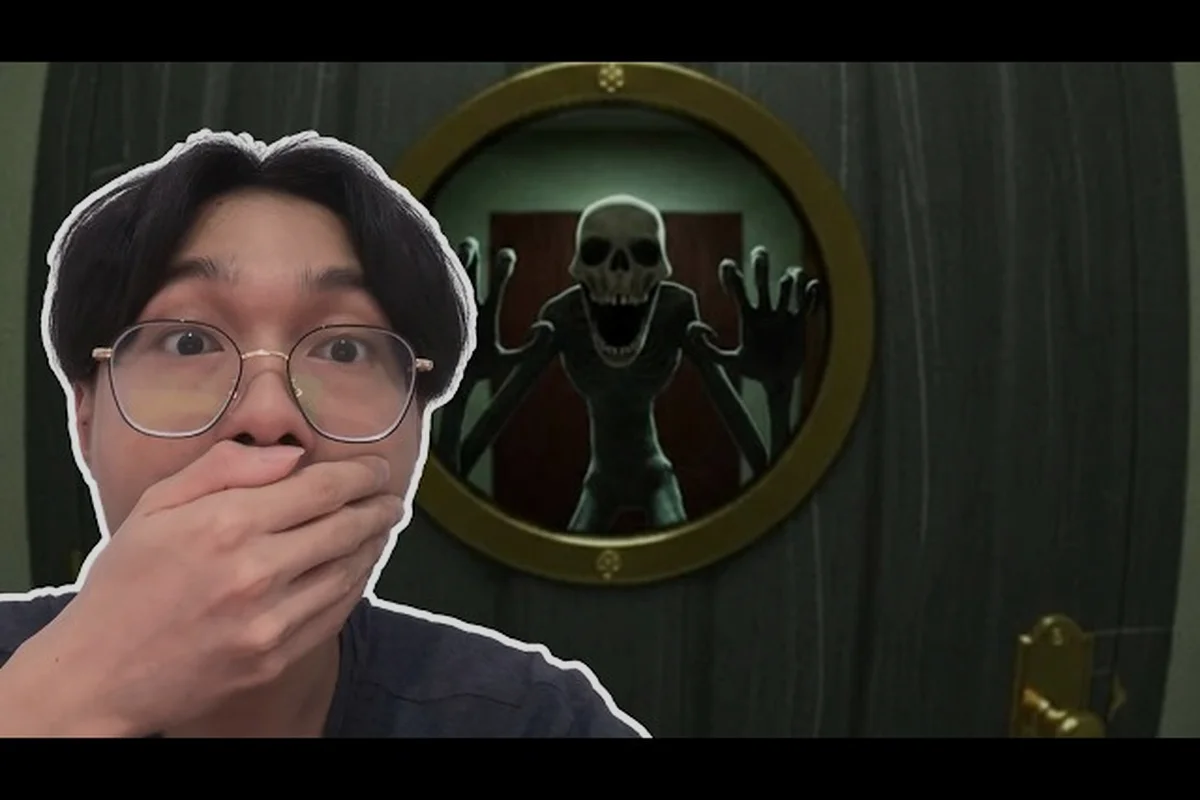
The core question every new player asks is simple: keep the door locked what rules to follow to survive your first night at the hotel. Since the game launched on May 28, 2026, it has pulled in over 4.3 million visits with more than 10,000 players online at peak hours, and most of those players lose their first shift because they ignored a single rule. This guide breaks down the complete rulebook so you know exactly what to do when that first knock comes.
The stakes are straightforward: strangers knock at your door after midnight, some genuinely need help, and some are lying to get inside. Watch the cameras, verify every claim, and decide who gets in because one wrong decision may be your last. Community data from the official Keep the Door Locked page on Roblox confirms that the game tracks your sanity meter, and when it hits zero, the night ends badly.
The Complete Rulebook in Priority Order
The keep the door locked rulebook is built around five core rules that govern every interaction during your shift. These are the foundation of the entire game, and understanding them deeply is what separates players who survive the night from those who get taken out before 3 AM.
The first rule is absolute: do not open the door before checking the cameras. Every single visitor must be verified through the monitor system before you even think about touching the door handle. The second rule states that you must keep the door locked unless the visitor is certain to be safe, which means you need positive identification, not just a plausible story.
The third rule requires you to watch the monitor carefully because anomalies reveal themselves on camera. Things that look normal in person often look wrong on the screen, and that discrepancy is your best warning sign. The fourth rule tells you to verify every claim against the room itself, which means checking whether the visitor's story matches what you can observe. The fifth and final rule is simple: when in doubt, turn the visitor away.
Core Rule Breakdown Table
| Rule | Action Required | Common Failure Point |
|---|---|---|
| Camera Check | Always review monitor before responding | Opening door on impulse |
| Locked Door | Keep locked unless certain visitor is safe | Trusting convincing stories |
| Anomaly Watch | Study camera feed for visual discrepancies | Missing subtle visual glitches |
| Claim Verification | Cross-check visitor story against room state | Accepting unverifiable requests |
| Doubt Protocol | Turn away any uncertain visitor | Letting guilt override judgment |
According to community reports, the keep the door locked rules to survive all funnel into one principle: your sanity meter is your real health bar. Every rule you break costs sanity, and when that meter empties, the game ends badly regardless of how many visitors you correctly identified. This means the rulebook isnt just about avoiding death, its about preserving your ability to make good decisions throughout the night.
What Happens If You Break Rules During Your Shift
Understanding keep the door locked what happens if you break rules requires recognizing that consequences escalate the longer you ignore the rulebook. The game doesnt punish you instantly for every mistake, which actually makes it more dangerous because small errors compound silently until you suddenly find yourself in a losing position.
Breaking a minor rule, like opening the door without checking cameras but finding a safe visitor, costs a small chunk of sanity. Breaking a major rule, like letting in a hostile entity because you skipped verification, can cost most of your sanity in a single interaction. The most severe violations, which typically involve ignoring multiple rules in sequence, can trigger immediate game-ending sequences that players report as sudden and brutal.
Sanity Loss Severity Table
| Rule Violation | Sanity Impact | Observable Effect |
|---|---|---|
| Open door without camera check | Minor loss | Slight screen distortion |
| Trust unverified visitor | Moderate loss | Flickering lights |
| Ignore anomaly warning | Major loss | Audible whispers |
| Let hostile entity enter | Severe loss | Sanity meter drops rapidly |
| Repeated violations in sequence | Critical loss | Game-ending sequence |
The keep the door locked what not to do list is essentially the inverse of the rulebook, but players consistently report three specific behaviors that end runs faster than anything else. The first is opening the door while the camera feed is still loading, which leaves you completely blind. The second is accepting visitor claims that you could have verified, especially requests for room access that dont match what the cameras show. The third is ignoring the doubt protocol and letting someone in because you feel bad about turning them away.
Night-Shift Rules for Staying Alive
The practical application of keep the door locked rules to survive comes down to building a reliable routine that you follow for every single knock. Players who survive consistently report that they never improvise, they always work through the same verification sequence regardless of how urgent the visitor sounds or how convincing their story appears.
Start every interaction by checking the camera feed for the full duration, not just a quick glance. The camera takes a moment to render properly, and anomalies often appear in the later frames of the feed rather than the initial image. Watch for anything that looks slightly off, whether its a shadow in the wrong place, a reflection that doesnt match the room, or a visitor whose movements dont align with their voice.
Next, cross-reference what the visitor says against what you can observe in the room. If someone claims they need help with a maintenance issue, check whether the room actually shows signs of that problem. If someone says theyre a guest who lost their key, look for any indication that they belong on this floor. The verification step is where most players fail because they let the visitors urgency override their own observation.
Night Shift Survival Checklist
-
Check the camera feed completely before responding to any knock, waiting for the full render cycle.
-
Verify the visitors claim against observable room conditions, never accepting stories without evidence.
-
Watch for anomalies in the camera feed, noting any visual discrepancy between what you see and what you hear.
-
Keep the door locked unless every verification step passes, even if the visitor sounds desperate or angry.
-
Trust the doubt protocol and turn away anyone you cannot fully verify, accepting the sanity cost over the risk.
The keep the door locked rules guide that experienced players share emphasizes that surviving is boring by design. The players who make it through the night are the ones who accept that most knocks are routine, most visitors can be safely turned away, and the exciting moments are exactly the ones that should make you most suspicious. According to community data, players who survive their first night report that they turned away more than half of all visitors who knocked.
Advanced Rule Application and Edge Cases
Once you understand the basics of keep the door locked what rules to follow, you need to recognize that the rulebook has edge cases that test your judgment. The game is designed to create situations where following the rules feels wrong, and players who stick to the letter of the rulebook often survive while those who make exceptions pay for their compassion.
The most common edge case involves visitors who appear genuinely distressed and whose claims check out against the cameras. Players report that some of these visitors are actually safe, but the game deliberately makes it impossible to be certain, which means the rulebook still says to turn them away. The sanity cost of refusing a genuine visitor is lower than the risk of admitting a hostile one, so the math always favors caution.
Another edge case involves the camera feed itself, which players report can be manipulated by certain entities. If the feed looks too clean, too perfect, or if the room appears different on camera than it does through the peephole, that discrepancy is itself an anomaly that should trigger the doubt protocol. Community testing suggests that the game rewards players who treat camera discrepancies as red flags rather than technical glitches.
Visitor Verification Matrix
| Visitor Claim | Camera Check | Room Verification | Recommended Action |
|---|---|---|---|
| Lost room key | Check for key card in hand | Look for signs of forced entry | Turn away unless fully verified |
| Maintenance request | Check for uniform and tools | Look for actual room damage | Verify tools match claim |
| Neighbor in distress | Check for visible injuries | Listen for matching sounds | Turn away, request more proof |
| Staff member | Check for staff badge | Look for room service cart | Require badge confirmation |
| No claim, just knocking | Check for visible identity | No verification possible | Always turn away |
For players who want to understand the deeper mechanics, the full walkthrough video by TheKacperosEN demonstrates how the rulebook applies across multiple nights, while the anomaly-focused walkthrough by Peta Perjalanan shows what happens when you follow every rule perfectly. Both videos confirm that the rulebook is consistent across play sessions, though exact consequences may vary slightly by version.
Common Mistakes and What Not to Do
The keep the door locked what not to do list comes from analyzing hundreds of community-reported deaths, and the patterns are remarkably consistent. The most common fatal mistake is treating the rulebook as a suggestion rather than a binding contract, which usually manifests as players making exceptions for visitors who seem harmless or desperate.
The second most common mistake is rushing the camera check, either by opening the door before the feed fully loads or by making decisions based on the first few frames. Players report that anomalies frequently appear only after several seconds of observation, so a quick glance is functionally the same as not checking at all. The camera feed is your only reliable information source, and treating it as optional is signing your own death warrant.
The third mistake involves emotional decision-making, specifically letting guilt override the doubt protocol. The game is designed to make you feel bad about turning people away, but that guilt is a weapon against you. Community data shows that players who turn away every unverifiable visitor survive significantly more often than those who try to be helpful, which confirms that the rulebook prioritizes survival over kindness.
Critical Mistakes to Avoid
-
Opening the door before the camera feed completes its full render cycle, which leaves you blind to anomalies.
-
Trusting visitor stories without verification, especially claims that match common scenarios like lost keys or maintenance issues.
-
Ignoring camera discrepancies and treating visual anomalies as technical glitches rather than warning signs.
-
Letting guilt override the doubt protocol, which means admitting visitors you cannot fully verify because you feel bad.
-
Repeating violations without recovering sanity, which pushes you into the critical threshold where consequences escalate.
For a deeper dive into what happens when you deliberately break the rules, the rule break consequences guide covers the escalation mechanics in detail, while the complete rules reference documents every known rule variant. Players who want to understand the philosophy behind the rulebook should check the follow the rules primer, which explains why the games design punishes improvisation.
Frequently Asked Questions
What is the most important rule in Keep the Door Locked?
The most important rule is to never open the door before checking the cameras completely. Every other rule builds on this foundation because the camera feed is your only reliable way to identify anomalies. Players who skip or rush this step consistently die faster than those who wait for the full render cycle.
How much sanity do you lose for breaking rules?
Sanity loss varies by violation severity, with minor infractions costing small chunks and major violations draining most of your meter. According to community testing, repeated violations compound the damage, and crossing critical thresholds triggers game-ending sequences. The exact numbers may vary by version, but the escalation pattern remains consistent.
Can you survive by turning away every visitor?
Yes, turning away every visitor is a viable survival strategy, though it costs some sanity per refusal. Community data shows that players who refuse all unverifiable visitors survive more often than those who take risks. The sanity cost of refusal is lower than the risk of admitting a hostile entity.
What happens when your sanity reaches zero?
When sanity hits zero, the night ends badly, with players reporting sudden game-over sequences that vary based on what triggered the final loss. The game does not give you a warning before the end, which makes preserving sanity a constant priority. Community reports suggest the ending sequence is always fatal.
Do the rules change between nights?
The core rules remain the same every night, but anomalies grow more frequent and aggressive as you progress. This means following the rules becomes harder, requiring a more disciplined routine to survive. The rulebook itself never changes, only the challenge of adhering to it increases.