
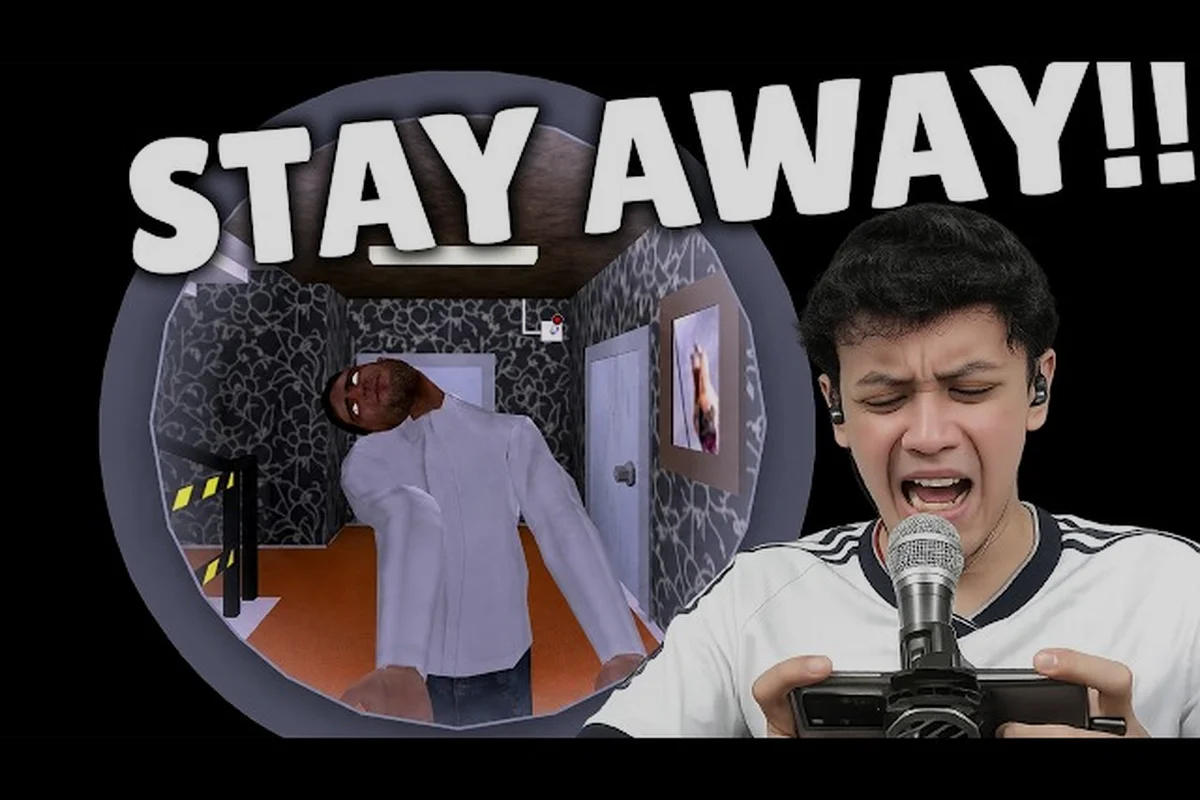
You're alone in a hotel room after midnight, and every knock could be your last. This keep the door locked anomaly guide breaks down how to identify fake visitors using camera feeds, story details, and voice cues so you never let the wrong one inside. Master keep the door locked anomaly detection before your next shift, because one wrong decision ends the run.
Understanding Keep the Door Locked Anomalies and Their Core Behavior
Every visitor who knocks on your hotel room door falls into one of two categories: a genuine guest needing help, or an anomaly wearing a human mask. The game launched May 28, 2026, and has already amassed over 4.3 million visits with more than 10,000 players online at peak hours, according to the official Roblox listing by developer Hotel Room Services (KivC). That player base has collectively documented dozens of distinct anomaly types, each with its own tells.
Anomalies in this game are fake visitors whose story details don't match the room environment, and the core mechanic revolves around catching those inconsistencies before you unlock the door. When you watch the CCTV feed, you might see oven smoke rising from a room that has no oven, or a faucet dripping in a bathroom where the pipes are dry. These environmental mismatches are the game's primary language for communicating danger.
The anomaly detection system works through three simultaneous channels: visual observation through cameras, audio cues from the hallway, and the visitor's own dialogue. Each channel provides independent evidence, and experienced players cross-reference all three before making a decision. A visitor might look normal on camera, but if their voice flips between a calm tone and a demonic gravelly growl mid-sentence, that's a red flag.
What makes this game particularly challenging is that anomaly behavior follows loose patterns rather than fixed scripts. While some creatures appear only on night vision or CCTV as ghostly figures or faceless shapes, others distort their height or change their cat's color between sentences. The unpredictability forces you to stay vigilant every single knock.
Community reports suggest that anomaly frequency increases as the night progresses, with the most dangerous visitors appearing after 3 AM. Players who survive the early hours often let their guard down, which is exactly when the game punishes complacency. Understanding these patterns is the foundation of any serious keep the door locked anomaly guide.
The Complete Anomaly Types and Their Visual Signs
The game currently features over a dozen documented anomaly forms, and new ones appear with each major update. Based on community testing and player reports, we've categorized the most common anomalies you'll encounter during a typical night shift. Knowing these patterns helps you prioritize camera checks, as certain anomalies only trigger after specific door interactions or time intervals, which veteran players often exploit to survive longer without wasting battery.
Body and Appearance Distortions
These are the easiest to spot because they require no special equipment — just careful observation of your surroundings. Oven smoke anomalies appear when a visitor claims they were cooking, but your room has no kitchenette. Leaking faucet anomalies occur when a guest mentions hearing water, yet your bathroom pipes are visibly dry. The game deliberately places these environmental clues throughout the room so observant players can catch the lie.
Camera-Only Anomalies
Some creatures exist only in the digital realm of your surveillance system. Ghostly figures appear as translucent silhouettes on the CCTV feed but vanish when you look through the peephole. Faceless shapes lack distinguishing features entirely, making them nearly impossible to identify without audio cues. Distorted height anomalies might appear taller or shorter than the human baseline, which becomes obvious when they stand next to the doorframe marker.
The table below summarizes the most frequently reported anomaly types and their primary detection methods: in practice, players rely on audio cues like door creaks and visual flickers to spot these threats early. Since each anomaly has a unique tell, memorizing the table’s pairings—such as the shadow’s light-based trigger versus the whisper’s sound proximity—is key to surviving longer rounds.
| Anomaly Type | Primary Detection | Secondary Clue | Danger Level |
|---|---|---|---|
| Oven Smoke | Environmental mismatch | Visitor mentions cooking | Medium |
| Leaking Faucet | Environmental mismatch | Visitor references water sounds | Low |
| Ghostly Figure | CCTV only | Disappears on peephole | High |
| Faceless Shape | CCTV only | No facial features visible | High |
| Color-Shifting Cat | Dialogue inconsistency | Cat color changes mid-sentence | Medium |
| Voice Flip | Audio distortion | Normal to demonic tone shift | Critical |
| Height Distortion | Visual comparison | Doorframe marker mismatch | Medium |
Color-shifting cat anomalies deserve special attention because they're the most subtle. A visitor might describe their gray cat, then mention the same cat's orange fur in the next sentence. This inconsistency happens quickly, so you need to actively listen rather than passively hear the dialogue.
The most common anomaly reported by players is the voice flip, according to community data from the game's official Roblox page. This might be because it's the easiest to implement mechanically, or because players simply notice it more often. Either way, training your ear to catch these audio shifts will save you more runs than any other single skill.
How to Detect Anomalies Through Audio and Voice Analysis
Voice analysis is arguably the most reliable keep the door locked anomaly detection method because audio cues are harder for the game to disguise than visual ones. The anomaly voices system uses distinct audio signatures that players can learn to recognize after a few encounters.
Voice Flip Patterns
The most documented audio anomaly involves voices flipping between a normal human tone and a demonic gravelly pitch. This flip can happen mid-word, making it easy to miss if you're not paying attention. Players report that the flip often occurs on emotionally charged words like "help" or "please," which are designed to trigger your empathy response and lower your guard.
Ambient Audio Clues
Beyond the visitor's voice, the hallway itself provides audio information. Footsteps that don't match the visitor's claimed identity — heavy boots when a woman claims to be a nurse, for instance — are reliable tells. Some anomalies also produce static or interference on the intercom, which never happens with genuine visitors.
Here's a practical audio checklist that experienced players use: they systematically cycle through door creaks, floorboard groans, and distant whispers to distinguish genuine threats from ambient noise. This habit is crucial because misreading a sound often costs a run, especially when the monster's footsteps blend with the house's natural settling. Veterans swear by muting music to sharpen this focus.
-
Listen for voice pitch shifts during emotional words
-
Note footstep weight against the visitor's stated profession
-
Watch for intercom static that appears only during anomaly speech
-
Pay attention to background sounds that don't match the claimed location
-
Track speech rhythm changes — anomalies often speak faster or slower than normal
The anomaly reactions to your questions are also informative. Genuine visitors respond naturally to follow-up questions, while anomalies often hesitate, repeat themselves, or change their story. This behavioral inconsistency is a powerful tool when combined with visual and audio evidence.
Community testing suggests that anomaly behavior becomes more erratic when you ask specific questions about their story details. If a visitor claims to be from room 204 but can't remember the room number when asked twice, that's a critical tell. Players who develop a standard set of verification questions report significantly higher survival rates.
Anomaly vs Human: Key Differences and Behavioral Patterns
Distinguishing between a real guest and an anomaly requires understanding the behavioral baseline that genuine visitors follow. Humans in this game have consistent patterns, while anomalies deviate in predictable ways. For example, real guests will always pause at the door before knocking, whereas anomalies may skip this step or knock twice in rapid succession—a tell many veterans rely on to avoid opening for the wrong entity.
Dialogue Consistency
Genuine visitors maintain story consistency across all their dialogue. If they say they're a plumber fixing a leak, they'll reference pipes, wrenches, and water throughout the conversation. Anomalies, by contrast, often contradict themselves because their underlying programming doesn't maintain a coherent narrative thread.
Emotional Response
Real visitors show appropriate emotional responses to your questions. A mother looking for her child sounds worried. A police officer sounds authoritative. Anomalies often display flattened or exaggerated emotions — either too calm for the situation or over-the-top dramatic in ways that feel unnatural.
The table below compares typical human versus anomaly behaviors, serving as a quick reference for players navigating the game’s unpredictable encounters. While humans tend to move with hesitation and react to sound, anomalies often exhibit erratic patterns, forcing you to adjust your hiding strategy mid-round. Observing these differences helps you decide when to hold still or reposition, a key edge in surviving the locked-door tension.
| Behavior Category | Genuine Visitor | Anomaly |
|---|---|---|
| Story Details | Consistent throughout | Contradicts itself |
| Emotional Tone | Matches situation | Flattened or exaggerated |
| Response to Questions | Natural and specific | Hesitant or repetitive |
| Physical Presence | Matches claimed identity | May distort on camera |
| Voice Quality | Stable pitch | May flip or distort |
| Environmental Match | References real room features | References nonexistent features |
Anomaly weaknesses are directly tied to these behavioral differences. The game rewards players who actively probe visitors with questions because anomalies struggle to maintain their facade under pressure. This is why the best keep the door locked anomaly tips always include a standard questioning routine.
The anomaly vs human distinction becomes more complex at higher difficulties, where some anomalies are programmed to mimic human behavior more convincingly. Players report that these advanced forms require multiple verification methods to catch, as they might pass one or two checks before failing on a third.
One particularly tricky pattern involves anomalies that reference the room correctly. These creatures have been observed mentioning the actual furniture layout or the correct room number, which fools players who rely solely on environmental mismatch detection. The key is to combine all detection methods rather than depending on any single tell.
Practical Strategy: Your Step-by-Step Anomaly Detection Routine
Developing a consistent routine is the most effective way to improve your keep the door locked anomaly detection skills. The following procedure, compiled from player experience and community guides, takes about 30 seconds per visitor and dramatically increases your survival odds.
Step 1: Camera Sweep
Before approaching the door, scan every camera feed for environmental anomalies. Check for oven smoke, leaking faucets, or any visual distortion in the room. This takes five seconds and catches the most obvious tells immediately. Since the door locks after each check, this pre-scan is your only safe window to spot changes without risking a failed interaction, and veterans often pair it with a quick audio cue check for dripping or hissing.
Step 2: Audio Assessment
Stand at the door and listen to the visitor's voice quality before speaking. Note any static, pitch instability, or background sounds that don't match the claimed story. This passive listening phase costs nothing and often reveals anomalies immediately. In practice, players who rush to respond miss these cues, while a patient ear can catch a subtle echo or a delayed breath that signals a mimic, saving you from a costly door unlock.
Step 3: Standard Question Set
Ask a consistent set of three verification questions for every visitor. Community players recommend asking about their room number, their reason for visiting, and a specific detail from their initial story. Genuine visitors answer all three without hesitation, while anomalies typically stumble on at least one.
Step 4: Cross-Reference Visuals
After the conversation, check the CCTV again to see if the visitor's appearance matches their claims. Look for height distortions, missing facial features, or any visual anomalies that weren't present during the initial sweep. This second pass is critical, as many players report that the entity only warps its form after dialogue, so comparing both footage angles can reveal subtle shifts that trigger the lockdown sequence early.
Step 5: Decision and Reaction
The anomaly spawns follow a semi-random pattern, but players report that certain nights have higher anomaly frequency than others. Keeping a personal log of which nights produce more anomalies can help you stay extra vigilant during high-risk periods, though the game doesn't officially document these patterns.
For players who want to optimize their survival strategy further, the keep the door locked survival guide covers additional techniques for managing sanity and resources across multiple nights, while the beginner guide explains the core mechanics if you're still learning the basics.
Advanced Anomaly Patterns and the 2026 Meta
As of the 2026 updates, the anomaly meta has shifted significantly based on community testing and developer patches. Understanding these advanced patterns separates experienced players from those who still struggle with basic detection. For instance, players now prioritize audio cues over visual flickers, since patched spawns often hide behind doorframes, and coordinating flashlight sweeps in pairs has proven far more effective than solo checks.
Multi-Signal Anomalies
The most dangerous anomaly types now combine multiple tells simultaneously. A visitor might have a voice flip, a color-shifting cat, and a height distortion all in one encounter. These multi-signal anomalies are designed to overwhelm players who rely on a single detection method, forcing you to process multiple channels simultaneously.
False Positive Traps
The 2026 update introduced false positive traps where genuine visitors display minor inconsistencies that mimic anomaly behavior. A real guest might stutter on their room number or mention a minor detail that doesn't perfectly match the room. These traps punish overly aggressive players who deny entry to anyone showing any irregularity.
The table below outlines the current anomaly difficulty tiers based on community reports, which are frequently updated after each patch. Players often consult these tiers before attempting a run, as higher-tier anomalies like the Warden require coordinated door-locking strategies, while lower tiers allow solo play. Community observations note that tier shifts usually follow major balance changes, so checking this list is a smart first step.
| Difficulty Tier | Example Anomaly | Detection Complexity | Player Skill Required |
|---|---|---|---|
| Tier 1 | Leaking Faucet | Single visual cue | Beginner |
| Tier 2 | Color-Shifting Cat | Dialogue tracking | Intermediate |
| Tier 3 | Voice Flip | Audio analysis | Intermediate |
| Tier 4 | Multi-Signal | Cross-channel verification | Advanced |
| Tier 5 | Mimic Anomaly | Full behavioral analysis | Expert |
Mimic anomalies represent the current endgame of keep the door locked anomaly detection. These creatures perfectly replicate human behavior, maintain consistent stories, and never display visual tells. The only way to catch them is through subtle behavioral analysis — they might respond slightly too quickly, or their emotional tone might be just barely off.
The anomaly ending varies based on your overall performance across the night. Players who successfully identify and deny every anomaly unlock a special ending sequence that isn't available to those who fail even once. This provides strong incentive to master the detection systems, as the alternate ending contains unique lore and rewards.
For players struggling with specific visitor types, the police visitor guide offers detailed breakdowns of one of the most commonly encountered guest categories, including which anomalies commonly disguise themselves as law enforcement. This guide is especially useful when managing early-night spawns, as police visitors often appear in clusters and require quick identification to avoid wasting flashlight batteries. Many community members recommend memorizing their uniform patterns to differentiate real officers from mimics before unlocking the door.
Common Anomaly Mistakes and How to Avoid Them
Even experienced players make predictable errors when dealing with anomalies, often by rushing to check a door without first listening for audio cues. Understanding these anomaly mistakes helps you avoid the same traps that end countless runs, such as forgetting to verify the lock indicator before moving on. A calm, step-by-step approach is your best defense.
Over-Reliance on Single Detection Method
The most fatal mistake is depending on only one type of clue. Players who only check environmental mismatches get fooled by anomalies that reference the room correctly. Those who only listen for voice flips miss visual anomalies. The game is specifically designed to punish single-channel detection.
Rushing the Decision
Deciding too quickly without completing your full verification routine leads to unnecessary deaths. The game creates urgency through dialogue and atmosphere, but you're never actually on a timer. Take the full 30 seconds to complete your routine, even when the visitor sounds desperate.
Here's a list of common mistakes that players report, often stemming from rushing door checks or ignoring audio cues. For example, forgetting to re-lock the door after a quick peek gives the entity a free opening, while lingering near windows wastes precious seconds. Veterans advise always verifying the lock icon before moving, as panic-induced double-clicks frequently trigger the very jumpscare you're trying to avoid.
-
Ignoring minor inconsistencies because the visitor seems otherwise normal
-
Letting emotional appeals override your detection routine
-
Assuming friendly visitors are automatically genuine
-
Forgetting to re-check cameras after the conversation
-
Skipping audio assessment when the visitor starts talking immediately
-
Not updating your detection methods when the game patches anomaly behavior
The anomaly pattern evolution across updates means that strategies which worked in previous versions may become obsolete. The developer actively tunes anomaly behavior based on player success rates, which keeps the meta fresh but also means you need to stay informed about current patch notes.
Community data from the official Roblox page indicates that player survival rates have actually decreased since the 2026 update introduced false positive traps, because players who previously denied entry to anyone suspicious now hesitate, giving real anomalies more opportunities to slip through.
Frequently Asked Questions
What is the most common anomaly in Keep the Door Locked?
According to community reports, the voice flip anomaly is the most frequently encountered type. This creature's voice shifts between a normal tone and a demonic gravelly pitch mid-conversation. Players notice it most often because audio cues are harder to miss than subtle visual inconsistencies, though the frequency may vary between updates.
How do I catch an anomaly that looks completely human?
Mimic anomalies that perfectly replicate human appearance require behavioral analysis rather than visual inspection. Ask verification questions about their story details, monitor their response speed, and pay attention to emotional tone. These anomalies typically respond slightly too quickly or display emotions that feel just barely off from genuine human reactions.
Can anomalies appear during the day or only at night?
The game's core premise revolves around midnight visitors, and anomalies only appear during active night shifts. However, the specific hours within the night affect anomaly frequency, with community data suggesting that encounters become more common after 3 AM when player fatigue and complacency are highest.
What happens if I deny entry to a genuine visitor?
Denying a genuine visitor costs reputation points but keeps you alive. The game tracks your accuracy rate, and too many false denials can lock you out of certain endings or rewards. The 2026 update introduced false positive traps specifically to penalize players who deny everyone, creating a balanced risk-reward dynamic.
Is there a way to predict which night will have more anomalies?
Anomaly frequency follows loose, unconfirmed cycles rather than a fixed schedule. Players tracking encounters often notice clusters of high-activity nights, though the game never documents spawn patterns. The rule list guide explains how mechanics interact with spawns, but predicting exact nights remains unreliable.