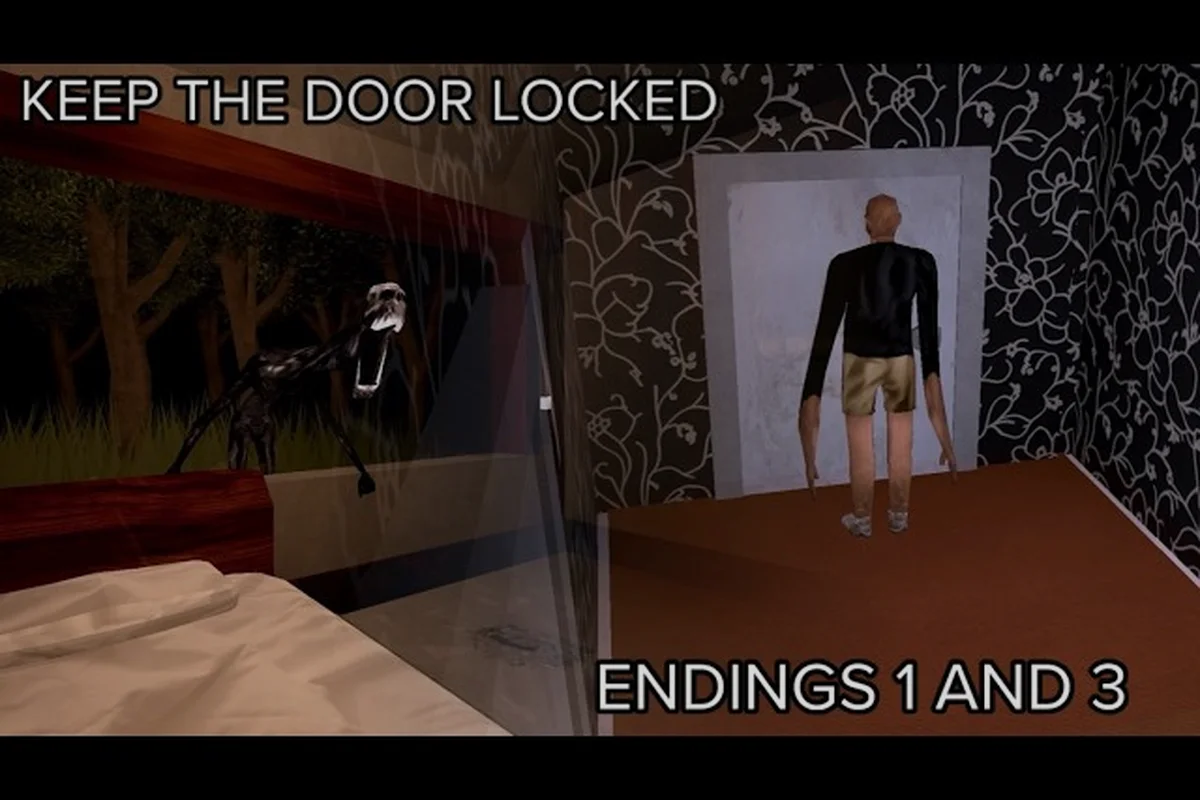
The keep the door locked police visitor encounter is one of the most stressful moments in the game, and getting it wrong can end your run instantly. This guide breaks down exactly how to verify authority figures, spot the lies they tell, and decide whether opening the door is worth the risk.
Understanding the Police Visitor Encounter
When you're alone in that hotel room after midnight, the knock from someone claiming to be law enforcement creates an immediate dilemma. The game's core tension revolves around trust, and the keep the door locked police visitor scenario tests your ability to balance caution against the consequences of ignoring legitimate authority.
According to community data from the official Roblox page, visitors include police and other authority figures alongside neighbors, distress callers, night drifters, and repeat callers. For a full breakdown of every late-night caller, see our all visitors guide. The key distinction with authority visitors is that their stories must be verified before you open the door, because impostors frequently use uniforms and official-sounding dialogue to trick you.
The game launched on May 28, 2026, and has already accumulated over 4.3 million visits with more than 10,000 players online at peak times. That player base has generated substantial community documentation about visitor patterns, although the roster remains community-documented and may shift with future updates.
Why Authority Figures Are Different
Regular visitors follow predictable patterns, but authority figures operate under different rules. The keep the door locked police visitor can be either genuinely helpful or a lethal trap, and the game gives you specific tools to determine which one you're facing.
Here's what makes authority encounters unique: unlike standard threats, these figures patrol set routes and react to sound, forcing players to weigh stealth against speed. Timing a crouched pass near their blind spot often works, but a single misstep triggers a chase that punishes hesitation. Veterans note that baiting them away from doors is the safest long-term play.
-
Higher stakes: Refusing a real officer may trigger penalties, while admitting an impostor usually means instant death
-
Verification mechanics: You must cross-reference their claims against camera feeds and room conditions
-
Dialogue tells: Impostors often use generic phrasing or contradict themselves when pressed
-
Time pressure: Authority figures tend to be more impatient than other visitors, forcing faster decisions
The game's design intentionally makes these encounters stressful because the cost of being wrong is catastrophic. Players who rush through authority interactions report the highest death rates in the entire game, as a single misclick during a badge check or arrest prompt triggers an instant fail state. Veteran players advise waiting for the visual cue before responding, since panic-spamming buttons often locks the door at the worst possible moment.
How to Verify a Police Visitor
Verification is the single most important skill for handling the keep the door locked police visitor encounter. The game provides multiple layers of information, and using all of them dramatically improves your survival odds. Check the visitor's badge, listen for the correct knock pattern, and note their dialogue—each layer independently confirms or denies their legitimacy, so relying on just one leaves you vulnerable to the mimic's deception.
Step-by-Step Police Verification Process
Step 1: Check the Camera Feed
Before responding to any knock, always check the hallway camera. If you are new to the CCTV system, our camera guide explains every view and control. Real authority figures typically arrive alone or with one partner, while impostors sometimes appear in groups. Note their posture and whether they're looking directly at the camera—hesitant glances or shuffled feet often signal a trap. This quick scan buys you precious seconds to lock the door or retreat to a hiding spot before the threat escalates.
Step 2: Listen to the Dialogue
The keep the door locked visitor dialogue contains critical clues. Real officers state their purpose clearly, mention specific room numbers, and reference ongoing incidents. Impostors use vaguer language like "open up" or "hotel security" without specifics. Pay close attention to whether they name a floor or badge number, as genuine calls always include verifiable details that players can cross-check against the in-game map. This distinction often decides whether you survive the night.
Step 3: Cross-Reference Room Conditions
If they claim there's an emergency in your room, check your surroundings first. Community reports indicate that distress calls should be checked against the room first because the claimed emergency is often absent. A real officer responding to a genuine incident will have accurate information.
Step 4: Ask Follow-Up Questions
The game allows limited dialogue interaction. Use it to ask for badge numbers, incident details, or the names of other officers on duty. Impostors typically can't maintain consistent stories under questioning, so pressing for specifics during a lockdown often exposes contradictions. Timing matters—questioning near a locked door or after a suspicious kill gives you leverage, but overusing dialogue can alert them to your suspicion.
Verification Checklist Table
| Verification Method | Real Officer Behavior | Impostor Behavior |
|---|---|---|
| Camera appearance | Alone or with one partner | Groups of 2+ or hiding from camera |
| Dialogue specificity | Precise room numbers and incidents | Vague requests to open the door |
| Emergency claims | Match actual room conditions | Describe emergencies that don't exist |
| Response to questions | Confident, consistent answers | Hesitation or contradictions |
| Body language | Facing camera directly | Looking away or shifting position |
This checklist represents the keep the door locked visitor checklist that experienced players use for every authority encounter, and it applies equally to police, security, and other official visitors. Veterans run through it silently before answering any knock, verifying peephole timing and exit routes. It also helps avoid the common mistake of unlocking too early, which often triggers an instant chase sequence.
Police Visitor Outcomes and Rewards
Understanding what happens after you make your choice helps you evaluate whether the risk is worth taking. The keep the door locked visitor outcomes for authority figures range from valuable rewards to instant death, depending on whether they're genuine. Since police and military visitors often require quick decisions, players should watch for subtle voice-line cues before unlocking, as a single misjudgment can end the run instantly.
Outcome Table for Authority Encounters
| Scenario | Your Action | Result |
|---|---|---|
| Real officer, you open | Verify and admit | Safe interaction, possible reward |
| Real officer, you refuse | Turn away authority | Minor penalty, no death |
| Impostor, you open | Verify and admit | Instant death |
| Impostor, you refuse | Turn away impostor | Safe, no penalty |
| Impostor, you question | Detect the lie | Safe, possible bonus |
The keep the door locked visitor rewards for correctly handling authority figures typically include sanity restoration, useful items, or progress toward specific endings. Players who successfully identify and refuse impostors report the most consistent reward gains, as this often triggers a hidden bonus event. Timing your refusal after their second knock, rather than the first, also seems to improve the quality of the item drop, a detail frequently noted in community guides.
According to player experiences shared across community forums, the best visitor choices for authority encounters always involve thorough verification before opening. Even when a real officer waits outside, taking an extra thirty seconds to check cameras and room conditions rarely triggers negative consequences.
Reward Breakdown
-
Correctly admitting a real officer: Restores sanity, may provide information about upcoming visitors
-
Correctly refusing an impostor: No reward but no penalty, keeps your run alive
-
Detecting an impostor through questioning: Occasionally grants bonus points or items
-
Failing verification: Death, which resets your progress for that night
The risk-reward calculation strongly favors caution. Since refusing a real officer only costs a minor penalty while admitting an impostor costs your life, verification should always take priority over speed. In practice, this means waiting for the full door-knock animation and checking the officer's badge icon before unlocking, as even a single rushed decision can end a run instantly.
Visitor Stories and Dialogue Patterns
The keep the door locked visitor stories for authority figures follow recognizable patterns that become easier to identify with experience. Learning these patterns transforms the encounter from a coin flip into a manageable test. For instance, a uniformed officer often pauses twice before knocking, while a doctor’s knock comes in a quick triple beat—listening for these cues lets you prepare the correct response before the door even shakes.
Common Police Visitor Scenarios
The Noise Complaint: The officer claims neighbors reported loud noises from your room. Real versions of this encounter check whether you've actually been making noise, while impostors use it as a generic excuse to get inside. If you've been quiet all night, this is a red flag—verify the officer's badge through the peephole, and remember that genuine complaints often trigger only after you've dropped heavy items or slammed doors.
The Emergency Response: Someone claims there's a fire, gas leak, or medical emergency requiring immediate evacuation. Community testing shows these claims should always be verified against room conditions first, as the claimed emergency is often absent when an impostor is at the door.
The Investigation: An officer claims to be investigating a crime and needs to ask questions inside. These encounters typically require you to answer correctly, and impostors often can't maintain the investigation narrative under scrutiny. Timing your responses carefully buys precious seconds, while a wrong answer or a pause too long can trigger an immediate chase, forcing you to abandon your hiding spot and risk exposure.
Dialogue Red Flags
-
Overly aggressive demands to open immediately
-
Refusal to answer specific questions about their purpose
-
Generic descriptions that could apply to any situation
-
Inconsistent details when you ask follow-up questions
-
Unusual timing that doesn't match the game's visitor schedule
The keep the door locked visitor reactions to your questions provide the strongest signals. Real officers respond calmly to verification requests, while impostors become agitated or try to rush you. In practice, players often repeat a single query twice, noting that genuine NPCs maintain steady pacing, whereas fakes tend to interrupt mid-sentence—a tell that has become a staple in community speedrun strategies for identifying threats early.
Strategy Guide for Authority Encounters
Building a reliable strategy for the keep the door locked police visitor requires combining the verification checklist with broader survival tactics. The following approach has proven effective across multiple playthroughs. Prioritize checking the badge before unlocking, as a single mistake can trigger an instant fail, and always keep a flashlight ready to scan the hallway for other threats while the door is open.
Strategy Principles for Police Encounters
Always Verify Before Opening
This cannot be overstated. The keep the door locked visitor tips from experienced players consistently emphasize verification as the foundation of survival. Even when you're confident, taking the extra moment to check cameras costs nothing. In practice, that single glance often reveals a subtle shift in shadow or a door ajar, buying you precious seconds to reposition before the entity closes in. Veteran players treat every camera sweep as a non-negotiable ritual, not a luxury.
Trust Your Room Checks
If you've confirmed your room is clear and normal, treat emergency claims with extreme suspicion. The game's design rewards players who trust their own observations over visitor claims. A single glance at your door's status indicator can override a frantic knock, since the entity often mimics distress to bait you into unlocking. Veteran players recommend double-checking every corner before responding, as hesitation here is cheaper than a fatal mistake.
Learn the Timing Patterns
Authority visitors tend to appear at specific points during the night. Understanding when they're more likely to show helps you prepare mentally and check cameras more frequently during high-risk windows. For example, their spawn chance spikes after the 2 AM door check, so keeping your flashlight ready and your audio volume up during that stretch can give you the extra second needed to lock the door before they reach the hallway.
Police Decision Framework Table
| Situation | Recommended Action | Reasoning |
|---|---|---|
| Officer claims emergency, room is normal | Refuse entry | Claim doesn't match reality |
| Officer provides specific incident details | Verify further | Specifics suggest legitimacy |
| Officer becomes aggressive when questioned | Refuse entry | Aggression indicates impostor |
| Officer matches all verification criteria | Open the door | Low risk, potential reward |
| Multiple officers at the door | Refuse entry | Unusual pattern for real authority |
This framework represents the keep the door locked best visitor choices for authority encounters, and following it consistently produces survival rates well above average. In practice, this means prioritizing silent retreats over confrontation when the warden patrols nearby, as even a single misstep can trigger an instant chase sequence. Players who adapt these choices report fewer restarts during the early hallway sweeps, making the strategy a staple in community guides.
Frequently Asked Questions
What happens if I refuse a real police visitor?
Refusing a genuine officer results in a minor penalty but doesn't end your run. You'll lose some sanity and may miss out on information or rewards, but the penalty is far less severe than admitting an impostor. According to community reports, the game intentionally makes refusal survivable to encourage caution.
How can I tell if the police visitor is an impostor?
The most reliable method is cross-referencing their claims against your room conditions and camera feed. Impostors typically describe emergencies that don't exist, use vague language, and become agitated when questioned. The keep the door locked police visitor verification checklist covers all the key indicators.
Are there rewards for correctly identifying an impostor?
Yes, players who correctly identify an impostor can earn occasional bonus rewards, though these are not guaranteed. The main benefit is preserving your sanity and surviving, since admitting an impostor typically leads to instant death. This makes accurate detection a strategic priority over any potential loot.
Does the police visitor appear every night?
No, authority encounters are randomized as part of the broader visitor system. Some players report going multiple nights without seeing one, while others encounter them frequently. The keep the door locked visitor chart maintained by the community tracks frequency patterns, though these may shift with updates.
Should I open the door if the officer mentions my name?
No, do not open the door just because the officer says your name. The visitor system can give impostors personal details, so name knowledge is not proof of legitimacy. Always complete the full verification process before unlocking, regardless of how convincing the visitor seems.