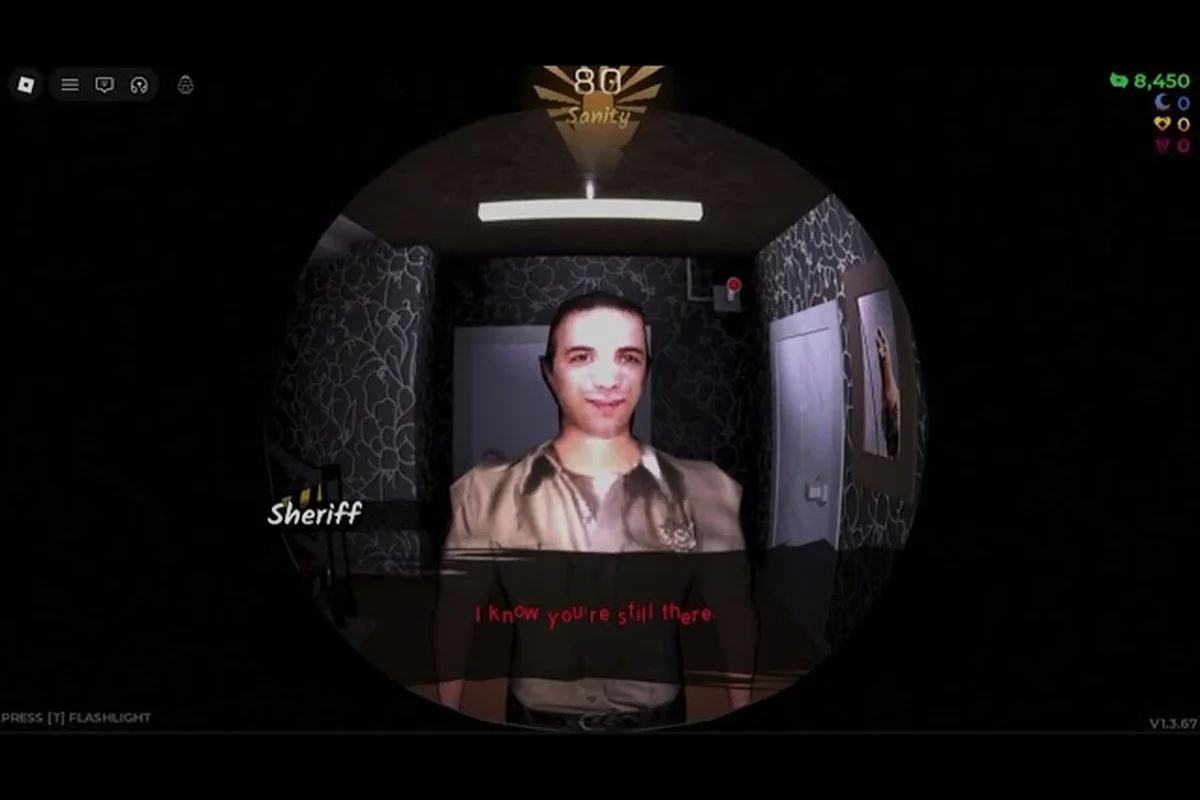
The knock comes at 2:47 AM. Three sharp raps against your hotel room door, and the peephole shows a figure in a police uniform. Your heart races as you check the camera feed — but something feels off about the badge. This is the moment keep the door locked people knocking scenarios become life-or-death decisions in this Roblox horror experience, and knowing who to trust means the difference between surviving until sunrise or becoming another missing guest report.
Every night in Keep the Door Locked throws visitors at your door with desperate stories, official-looking credentials, and pleading voices. The game, launched May 28, 2026 by developer Hotel Room Services (KivC), has already amassed over 4.3 million visits with more than 10,000 players online at peak hours. The core loop is deceptively simple: watch the cameras, check the rules, and decide who gets inside. What makes it terrifying is that keep the door locked visitors follow patterns you must learn through experience — or through guides like this one.
How the Visitor System Works for Knockers
The visitor system operates on a verification-first philosophy that punishes impulsive decisions. Every knock presents a unique scenario drawn from a rotating roster of characters, and each one requires you to cross-reference what they claim against what the cameras show. The game deliberately withholds information to force you into the uncomfortable position of making judgment calls with incomplete data.
Keep the door locked people knocking events fall into five documented categories, each with distinct behavioral tells that observant players can spot before unlocking the door. Recognizing these tells early lets you avoid wasting time on false alarms, since some knock patterns repeat rapidly to bait a hasty open. Veterans often wait for a second pause in the rhythm, as that pause reliably signals a genuine threat versus a harmless distraction.
-
Police and authority figures — These visitors carry the highest social pressure because refusing them feels wrong, yet they are also the most frequently impersonated by anomalies
-
Neighbors from adjacent rooms — They often claim to have seen something suspicious or need to borrow something, but their stories rarely match what the hallway cameras reveal
-
Distress callers — The classic "I need help" scenario where someone claims injury or danger, which requires immediate verification against the room interior
-
Night drifters — Random strangers with no clear reason for being at your door, often testing whether you follow the rules strictly
-
Repeat callers — Visitors who knock multiple times with escalating pressure, designed to wear down your resistance through persistence
The critical insight from community testing is that keep the door locked visitors never break character until you make a decision. An anomaly will maintain its disguise perfectly, which means you cannot rely on voice acting or visual glitches to identify threats. Instead, you must verify every claim against the physical evidence available through your camera system.
According to player reports from the official Roblox page, the visitor roster is community-documented and may shift with updates, but the verification mechanics remain consistent. The game rewards methodical players who check every angle before responding, while punishing those who act on emotion or social pressure.
How to Verify Visitors Before Opening the Door
Your hotel room comes equipped with a camera system that shows the hallway, the room interior, and the area around your door. These cameras are your primary defense against keep the door locked people knocking threats, because they let you cross-reference what visitors claim against observable reality.
Cross-Referencing Claims Against Camera Feeds
The verification process follows a simple but effective protocol that experienced players recommend for every single knock, regardless of how convincing the visitor appears: always check the peephole first, then confirm the visitor's name against the guest list before touching the handle. Even a familiar face can be a mimic, so veterans time their response to the second knock, ensuring they never unlock prematurely and risk a fatal breach.
-
Check the hallway camera first — Look for whether the visitor actually came from somewhere plausible, or if they simply materialized at your door
-
Verify the room interior — If someone claims a fire or injury inside your room, check whether the cameras show any evidence of that emergency
-
Look for inconsistencies in appearance — Compare the visitor's stated identity against visual details like uniform quality, badge placement, or physical features
-
Wait for the second knock — Anomalies often reveal subtle changes between knocks, while legitimate visitors repeat the same story consistently
-
Trust the rulebook over your instincts — The game provides rules that override emotional responses, and following them strictly is always the safest choice
The most common mistake new players make is treating keep the door locked people knocking events as social puzzles rather than verification challenges. You are not trying to determine whether someone seems trustworthy; you are trying to determine whether their claims match observable evidence.
High-Stakes Authority Visitor Protocol
Police and authority figures require special handling because they trigger a psychological response to comply with authority. However, community data shows that these visitors are among the most frequently impersonated by anomalies, which means you must apply even stricter verification standards.
Keep the door locked visitors in authority uniforms must have their stories verified before you consider opening the door. If a police officer claims there has been a disturbance in your room, check the room camera first. If they claim to be responding to a call, check whether the hallway shows any activity consistent with that claim. The badge and uniform are not proof of legitimacy — the evidence is.
Players who survive the longest report that treating every visitor as potentially hostile, regardless of appearance, is the only consistent survival strategy. This does not mean being rude or refusing everyone; it means never opening the door until the evidence supports doing so.
Safe and Dangerous Visitor Patterns
While the visitor roster can shift with updates, community documentation has identified consistent patterns that help players predict whether keep the door locked people knocking events are likely safe or dangerous. These patterns are based on thousands of player reports and should be treated as strong indicators rather than absolute guarantees.
Documented Safe Visitor Indicators
The following table summarizes visitor types that community testing has consistently identified as safe, along with the verification steps that confirm their legitimacy: these checks typically involve observing door-knock patterns and waiting for the visitor to leave after a set timer. Players should always cross-reference the table before unlocking, as even safe types can behave unpredictably during late-night rounds.
| Visitor Type | Typical Claim | Verification Method | Safety Rating |
|---|---|---|---|
| Neighbor with matching story | Lost key or needs phone | Check hallway camera for them exiting adjacent room | Generally Safe |
| Staff with visible room key | Maintenance or room service | Verify uniform matches hotel staff appearance | Usually Safe |
| Distress caller with visible injury | Needs medical help | Confirm injury visible on camera, not just claimed | Conditional |
| Repeat caller with consistent story | Same claim across knocks | Compare wording and details between knocks | Often Safe |
Documented Dangerous Visitor Patterns
The following table outlines visitor types that community reports consistently flag as dangerous, along with the tells that expose them: these patterns often surface during late-night spawns or after prolonged silence in the hallway. Players who memorize these cues can pre-lock doors before a knock even lands, though veterans warn that some mimics deliberately fake a tell to bait overconfident survivors.
| Visitor Type | Common Deception | Red Flag | Danger Level |
|---|---|---|---|
| Police with vague story | Claims disturbance without specifics | Cannot name the specific room issue | High |
| Distress caller with no evidence | Claims emergency inside your room | Room camera shows nothing unusual | Critical |
| Night drifter with urgent plea | Pressures you to open quickly | Story changes between knocks | High |
| Authority figure with uniform errors | Badge or uniform details incorrect | Visual inspection reveals inconsistencies | Critical |
The key takeaway from these patterns is that keep the door locked visitors who pressure you to act quickly are almost always dangerous. Legitimate visitors are patient because they have nothing to hide; anomalies create urgency because they need you to bypass verification.
For a more detailed breakdown of which visitors appear and how to identify them, check our visitors list guide that catalogs every documented visitor type with their behavioral patterns. This guide is especially useful when you're low on batteries, since knowing each visitor's tell—like a specific knock rhythm or shadow shape—lets you decide whether to open the door or stay silent, saving precious power for later waves.
Handling Distress Calls and Emergency Claims
Distress calls represent the most emotionally manipulative category of keep the door locked people knocking scenarios because they weaponize your empathy. A visitor claiming to be injured, trapped, or in danger triggers an instinctive desire to help, which anomalies exploit ruthlessly.
The verification protocol for distress calls is straightforward: check the room first. If someone claims there is a fire, an intruder, or a medical emergency inside your room, the room camera will show evidence of that emergency if it actually exists. Community data consistently shows that claimed emergencies are often absent from the camera feeds, which means the visitor is lying.
Keep the door locked visitors who claim emergencies fall into two categories: those who genuinely need help and those who use the claim as a lure. The distinction is always visible on camera. A genuine emergency leaves physical evidence — smoke, movement, visible injury. A fabricated emergency leaves nothing, because the anomaly cannot create evidence that does not exist.
Players who survive the highest number of nights report that checking the room camera before responding to any distress claim is the single most effective survival habit they developed. This one action eliminates the majority of anomaly attacks because most dangerous visitors rely on you skipping verification.
For a deeper look at how to handle strangers who appear at your door with various stories, our strangers at door guide covers the full range of scenarios you will encounter. Each visitor follows a distinct pattern, so recognizing their opening line early can save you precious time before the lock meter drains. Many players find that ignoring the door entirely is safer than risking a wrong guess, especially during later nights.
Building a Survival Strategy for the Full Night
Surviving until sunrise requires more than knowing individual visitor patterns; it requires a comprehensive strategy that manages your attention, your verification habits, and your decision-making under pressure. The following approach has been refined through community testing and consistently produces the highest survival rates.
Survival Principles for People Knocking
The foundation of any successful night in Keep the Door Locked rests on three principles that govern every interaction: listening, positioning, and resource discipline. Players who master these quickly learn that sound cues from the hallway dictate when to hold still, while door placement determines escape routes. Veterans often note that hoarding batteries for the final hour outweighs early convenience, a trade-off that separates survivors from victims.
-
Verify everything, trust nothing — Every claim must be checked against camera evidence before you consider opening the door, regardless of how urgent or convincing the visitor sounds
-
Follow the rules over your instincts — The game provides rules that override emotional responses, and following them strictly is always the safest choice
-
Maintain situational awareness — Keep checking all cameras regularly, not just when someone knocks, because threats can develop in the hallway before they reach your door
Night Progression Strategy
The night progresses through phases, and each phase requires different levels of vigilance. Early phases allow for brief resource checks, but later ones demand constant camera sweeps and door monitoring. The following table outlines the typical progression and recommended strategies, including when to prioritize battery conservation over door checks, a tactic veteran players rely on to survive the final stretch.
| Time Period | Threat Level | Recommended Strategy |
|---|---|---|
| Midnight to 1 AM | Moderate | Establish camera check routines, learn the hallway baseline |
| 1 AM to 3 AM | High | Maximum vigilance, verify every visitor thoroughly |
| 3 AM to 5 AM | Critical | Assume every visitor is hostile, only open for verified emergencies |
| 5 AM to Sunrise | Moderate | Maintain verification discipline, watch for final pushes |
The middle hours of the night represent the highest danger window because anomalies become more aggressive and visitors become more persistent. Players who survive report that maintaining strict verification discipline during these hours is essential, as keep the door locked people knocking events increase in frequency and intensity.
When you encounter a visitor whose identity you cannot verify with confidence, the safest choice is always to keep the door locked. The game does not punish you for being cautious, but it absolutely punishes you for being careless. If you are unsure whether to open the door, our who to let inside guide provides decision frameworks for every visitor type.
Advanced Anomaly Detection Techniques
Beyond the basic verification protocols, experienced players have developed advanced techniques for identifying keep the door locked visitors who are actually anomalies in disguise. These techniques rely on subtle details that most players miss during the stress of a knock.
Behavioral Analysis
Anomalies often exhibit subtle behavioral differences from legitimate visitors that careful observation can reveal: a slight pause before opening a door, an unnatural pathing pattern, or an incorrect animation loop. Players who memorize the standard NPC routes gain a critical edge, as these deviations are the only reliable tells before an anomaly initiates its chase sequence.
-
Timing patterns — Anomalies may knock at irregular intervals or with unusual rhythms, while legitimate visitors follow natural human timing
-
Response consistency — When you ask questions through the door, legitimate visitors answer consistently across multiple queries, while anomalies may contradict themselves
-
Physical details — Anomalies may have subtle visual inconsistencies like slightly wrong uniform colors, misplaced badges, or unusual eye behavior on camera
-
Pressure tactics — Anomalies escalate urgency more aggressively than legitimate visitors, using fear and time pressure to bypass your verification
Camera Exploitation
Your camera system provides more information than most players use. Advanced players exploit the cameras to gather additional data: tracking the monster's exact position across multiple rooms, timing its patrol routes, and spotting which doors are being tested. This intel lets you pre-position at safe zones or bait the monster into predictable patterns, turning a basic surveillance tool into a survival advantage.
-
Track visitor arrival — Watch where the visitor comes from on the hallway camera; anomalies often appear from nowhere or from wrong directions
-
Monitor visitor departure — If you refuse a visitor, watch where they go; anomalies may vanish or behave strangely after being refused
-
Check adjacent areas — Some anomalies have accomplices or exhibit unusual behavior in areas outside the direct camera view
For a comprehensive breakdown of how to distinguish real visitors from fake ones, our fake visitors guide covers all documented anomaly types and their detection methods. Players often rely on subtle behavioral cues, such as delayed door-knocking patterns or unnatural pauses in movement, to spot fakes early. The guide also highlights which anomalies require immediate lock-down versus those that can be safely observed, helping you survive longer without wasting resources.
Frequently Asked Questions
How do I handle keep the door locked people knocking situations when I am new?
Follow the verification protocol for every visitor: check the hallway and room cameras, then compare their claims to what you see. Never open the door for anyone you cannot verify, no matter how urgent they sound. Prioritize survival over helping, since one wrong decision means instant death.
What should I do when a police officer knocks on my door?
Treat authority figures with the same verification standards as any other visitor. Check whether their claims match the camera evidence, look for uniform or badge inconsistencies, and do not let the uniform pressure you into opening the door. Community data shows that police impersonators are common, so verify their story before responding.
Can I survive the night by refusing every visitor?
Yes, refusing every visitor is a viable survival strategy, though it may lock you out of certain content or achievements. The game does not require you to open the door for anyone, and keeping the door locked is always the safest choice. If you want to help visitors, do so selectively after verifying their claims.
How do I know if a distress call is genuine?
Check the room camera immediately when someone claims an emergency inside your room. Genuine emergencies leave visible evidence on camera, while fabricated claims show nothing unusual. Community testing consistently shows that claimed emergencies are often absent from camera feeds, which means the visitor is likely an anomaly.
What happens if I let an anomaly inside?
Letting an anomaly inside results in immediate death, ending your run. There is no second chance and no way to fight back once the door is open. This is why verification is so important — the cost of a wrong decision is total failure, while the cost of refusing a legitimate visitor is simply missing out on potential rewards.