
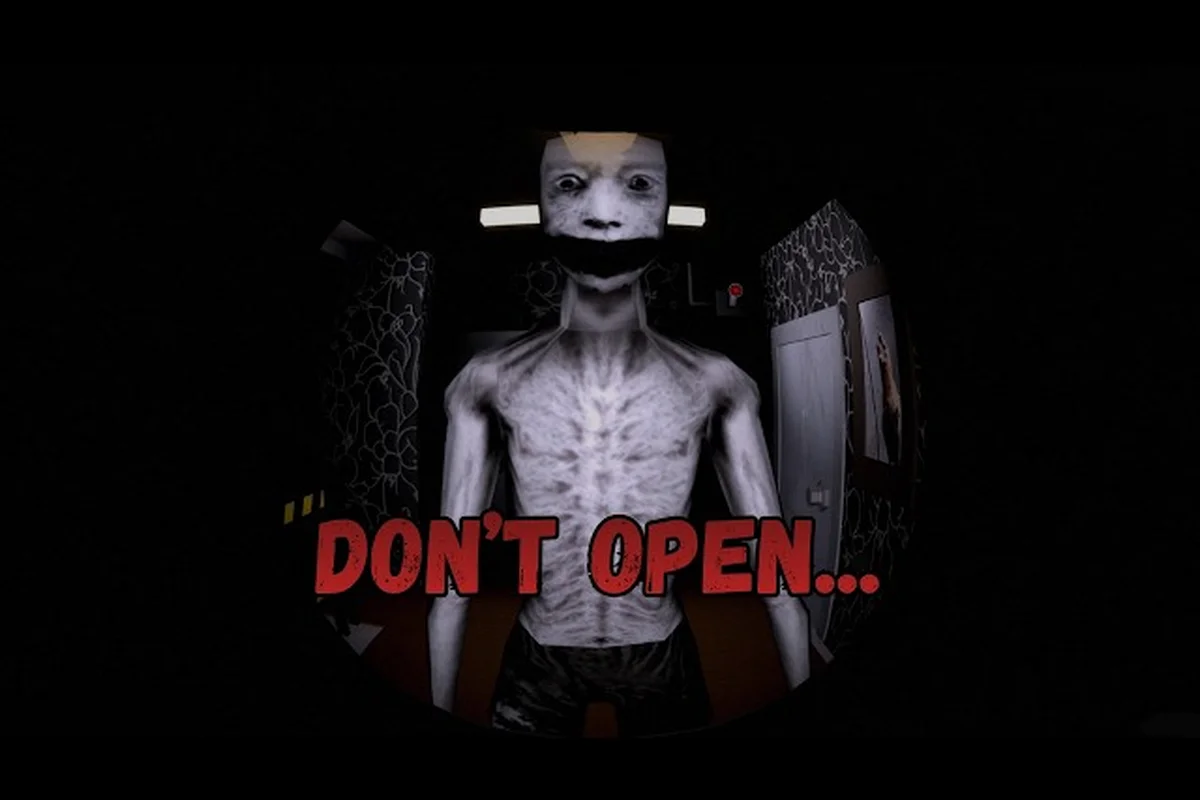
You're alone in a hotel room after midnight, and every knock on the door could be your last. This Keep the Door Locked survival guide breaks down the exact routines, sanity mechanics, and visitor vetting systems you need to survive until sunrise. Get the latest strategies that 4.3 million players have already used to outlast the night.
Core Survival Loop: Watch, Verify, Decide
The fundamental survival loop in Keep the Door Locked revolves around three repeating actions: scanning your cameras, verifying the visitor's story, and deciding whether to open the door. This loop repeats roughly every 60-90 seconds throughout each night, and mastering the rhythm is what separates players who survive from those who become another cautionary tale. Community data suggests that players who establish a pre-knock routine within their first three nights significantly reduce their death rate compared to those who react impulsively.
Your pre-knock routine should follow this sequence every single time: first, check the hallway camera feed for any movement, then verify the door’s lock indicator is green, and finally position yourself at the peephole with your flashlight off. This order minimizes exposure during the critical seconds before the knock, since players who skip the camera check often get caught mid-repair when the entity spawns early.
-
Scan all camera feeds before approaching the door to check for anything lurking in the hallway shadows
-
Check night vision mode if the lighting is poor, since several anomalies are only visible in this spectrum
-
Prep the door by positioning yourself near the peephole while keeping one hand on the lock
-
Listen carefully before responding, because several anomalies are caught by voice rather than sight
The sanity system ties directly into this loop, since each wrong decision drains your mental stability. When your sanity drops below critical thresholds, the game introduces visual distortions that make camera scanning unreliable. Players report that maintaining sanity above 70% keeps the camera feeds clear enough to spot subtle anomalies, while anything below 50% risks hallucinations that show false visitors.
Why the First 200 Seconds Matter Most
The opening minutes of each night establish the difficulty curve for everything that follows. Based on community testing, the first visitor typically arrives within 90-120 seconds of the night starting, and how you handle this initial encounter sets the tone. The first 200 seconds are critical because your sanity is still at maximum, giving you clean camera feeds and clear audio cues to learn each visitor's baseline behavior.
This is also when you should memorize the hallway layout and identify all camera blind spots. Experienced players recommend spending the first 30 seconds after the lights dim doing nothing but cycling through every camera angle, since the game's opening calm is the only guaranteed safe moment to gather this information. If you've followed a beginner guide to learn the controls, you already know that camera cycling is your most powerful tool for gathering information without risking exposure.
Visitor Vetting: Separating Help from Harm
Every visitor who knocks on your door presents a unique challenge, and learning to identify their tells is the core of the survival experience. The game launched on May 28, 2026, and community reports have already documented over a dozen distinct visitor types, ranging from genuinely helpful neighbors to lethal impostors. Your ability to verify every claim before opening the door directly correlates with your survival rate.
The following table breaks down the most common visitors and their key identification markers, based on player reports from the first months after launch. These observations focus on visual cues like silhouette and movement speed, which are critical for spotting threats before they reach the door. Players should note that some markers only appear under specific lighting conditions, so a quick flashlight sweep remains the safest habit.
| Visitor Type | Claim They Make | Key Tell | Recommended Action |
|---|---|---|---|
| Lost Guest | Forgot room number | Looks at room card repeatedly | Check their card through peephole |
| Hotel Staff | Maintenance check | Wears uniform, carries toolkit | Verify with front desk camera |
| Police Officer | Noise complaint | Badge visible, but check stitching | Confirm badge details carefully |
| Neighbor | Needs phone charger | Speaks quickly, avoids eye contact | Offer to slide charger under door |
| Anomaly | Any urgent claim | Voice sounds slightly delayed | Trust your cameras over their words |
| Child | Lost parent | Small figure, crying voice | Never open for children at night |
The most dangerous visitor category remains the police officer impostor, according to community data. This anomaly mimics the police uniform perfectly but has subtle stitching errors on the badge that only appear under night vision. Players who rush to open the door for authority figures often die instantly, which is why the police visitor guide has become essential reading for the community.
Audio Cues That Save Lives
Your ears are just as important as your eyes in Keep the Door Locked, since several anomalies give themselves away through voice manipulation. The game uses a sophisticated audio system where each visitor has a specific vocal pattern, and anomalies often have a slight delay between their speech and the room's echo. This delay is nearly imperceptible to new players but becomes obvious once you know what to listen for.
Players recommend wearing headphones because the game uses directional audio to indicate where sounds originate. A genuine visitor's voice should come directly from the door, while anomalies sometimes project their voice from a different angle. Additionally, background sounds like hallway chatter or elevator dings can confirm whether the area outside matches the visitor's story. If someone claims to be hotel staff but you hear no cart wheels on the carpet, trust the silence and keep the door locked.
Sanity Management: Your Hidden Health Bar
The sanity mechanic operates as a hidden health bar that determines how reliably you can perceive threats. Every wrong decision, every unnecessary door opening, and every failed verification drains your sanity. Community-inferred data suggests that the game tracks sanity on a 100-point scale, with visible visual distortions appearing below 50% and full hallucinations below 25%.
Your sanity management strategy should prioritize prevention over recovery, since the game offers limited ways to restore lost stability. Turning away suspicious visitors early, even if they might be genuine, protects your sanity more than risking a wrong opening. The following table shows the estimated sanity costs and gains for common actions, based on player testing:
| Action | Sanity Impact | Notes |
|---|---|---|
| Correctly turning away an anomaly | +5 | Reinforces trust in your judgment |
| Incorrectly turning away a human | -10 | Doubts your perception |
| Opening door for a human | +3 | Small confidence boost |
| Opening door for an anomaly | -25 | Major psychological damage |
| Missing a camera check | -2 | Accumulates over time |
| Surviving to next hour | +8 | Natural recovery period |
The sanity system also affects your emotional state during gameplay, which is why the community has developed the emotional guide approach to playing. This strategy involves acknowledging that fear responses are part of the experience and using them as information rather than letting panic drive your decisions. Players who remain calm tend to make better verification choices, creating a positive feedback loop where good decisions preserve sanity, which enables better decisions.
Recognizing and Recovering from Low Sanity
When your sanity drops below 50%, the game begins introducing visual distortions that mimic anomalies. You might see a figure standing at the end of the hallway that vanishes when you focus on it, or hear knocking that never actually happens. These false signals are designed to make you second-guess your verification process, and many players die precisely because they open the door thinking they're seeing a real threat.
Recovery options are limited but exist. The survival route that most successful players follow involves prioritizing sanity preservation during the first half of the night, then becoming more selective about which visitors to engage with during the second half. If you notice your sanity dropping rapidly, retreat to a corner of the room away from the door and wait for the next natural recovery period, which community reports indicate occurs around the hour mark.
Night-by-Night Progression Strategy
Keep the Door Locked structures its difficulty through a night-by-night progression, where each successful survival unlocks more content and introduces new visitor types. The unlock more nights mechanic means that surviving Night 1 doesn't just feel good—it actively expands the game's possibilities for future runs. Players who follow a structured progression strategy tend to unlock content faster than those who play reactively.
The survival checklist for each night follows a similar pattern, but the difficulty curve requires adjustments: early nights allow a relaxed routine, while later ones demand strict prioritization of door checks and battery conservation. Players quickly learn that skipping a single audio cue or misjudging a knock’s timing can cascade into a lockdown failure, forcing a more reactive, less methodical approach.
-
Night 1-2: Focus on learning baseline visitor behaviors and establishing your pre-knock routine
-
Night 3-4: Begin experimenting with riskier verification methods to identify anomaly patterns
-
Night 5-6: Expect new visitor types and more aggressive anomaly behaviors
-
Night 7+: Challenge mode territory where optimal play becomes mandatory
The hardest part of the game, according to community polling, is the transition between Night 3 and Night 4, where the game introduces compound anomalies that combine traits from multiple visitor types. This difficulty spike catches many players off guard because they've grown comfortable with the earlier patterns. Preparing for this transition by studying anomaly behavior through the anomaly guide can significantly smooth the difficulty curve.
Optimal Play vs. Safe Play
The community has developed two competing philosophies for long-term survival: play it safe versus risky play with high risk and high reward potential. The safe approach prioritizes sanity preservation and conservative verification, accepting fewer rewards but maintaining consistent survival. The risky approach involves opening doors more frequently to farm rewards, accepting that some visits will end in death.
The optimal play strategy balances these approaches by identifying which nights reward risk-taking and which demand caution. Community data suggests that early nights (1-3) offer better reward-to-risk ratios for opening doors, while later nights (5+) punish mistakes more severely. For the long play goal of unlocking all content, most successful players recommend:
-
Farm rewards aggressively on early nights to build resources for later challenges
-
Switch to conservative play once you reach Night 4 or beyond
-
Save risky verification experiments for runs where you're willing to lose progress
The efficient play approach also considers time investment, since a single night can take 15-20 minutes of real time. Players aiming for completion should focus on survival consistency over speed, because dying on Night 5 wastes more time than surviving slowly through Nights 1-4.
Common Survival Mistakes and How to Avoid Them
Every player makes mistakes in Keep the Door Locked, but understanding the common mistakes that lead to death can dramatically improve your survival rate. Community analysis of death reports reveals several patterns that account for the majority of premature endings. The survival mistakes that kill most players stem from predictable behavioral errors rather than bad luck.
The following table ranks the most frequent fatal mistakes based on community-reported death data, drawing from thousands of in-game incidents logged by players. Unsurprisingly, opening the door too early tops the list, as it instantly triggers the monster’s chase phase, while lingering near the closet during a heartbeat event often leads to a cornered death. Veterans advise memorizing these patterns to prioritize survival over curiosity.
| Mistake | Frequency | Preventative Measure |
|---|---|---|
| Opening for police without verification | 32% | Always check badge stitching under night vision |
| Ignoring audio anomalies | 24% | Trust directional audio over visual confirmation |
| Letting sanity drop below 30% | 18% | Turn away any suspicious visitor early |
| Rushing camera checks | 15% | Cycle cameras slowly and methodically |
| Opening during compound anomalies | 11% | Wait for multiple verification signals |
The no death guide approach that hardcore players follow involves treating every night as if it were your first, maintaining the same caution level regardless of how many nights you've survived. Complacency kills more players than inexperience, because veteran players start taking shortcuts that introduce fatal errors.
The Grind Guide: Efficient Reward Farming
For players focused on the grind guide aspect of the game, efficient reward farming requires understanding which actions provide the best return on sanity investment. The high risk high reward strategy of opening doors frequently can triple your reward output, but it also multiplies your death probability. The key is identifying which visitor types offer the best reward-to-risk ratio.
Community testing suggests that turning away suspicious visitors early actually provides modest rewards while preserving sanity, making it the most efficient play for long-term resource accumulation. The farm rewards approach that balances safety with income involves rejecting high-risk knockers before they escalate, then reinvesting those small gains into door upgrades. This strategy keeps your sanity bar stable across multiple nights, which veteran players note reduces the frequency of forced lockdowns.
-
Opening for confirmed human visitors who pass all verification checks
-
Turning away all anomalies once identified, regardless of potential rewards
-
Prioritizing sanity over rewards during the second half of each night
This survival route has proven most effective for players aiming to unlock more nights, since consistent survival multiplies rewards more than occasional high-risk successes. The challenge mode that unlocks after completing the main progression demands exactly this balanced approach, as it removes most safety nets and forces optimal decision-making.
Frequently Asked Questions
What is the most dangerous visitor in Keep the Door Locked?
The police officer impostor is the most dangerous visitor because players instinctively trust authority figures and rush to open the door. This anomaly has subtle badge stitching errors that only appear under night vision, and it kills players who skip proper verification. Always check the badge details carefully before opening for any police officer.
How does the sanity system affect survival?
Sanity acts as a hidden health bar that determines your perception reliability. Below 50%, visual distortions appear and mimic anomalies, while below 25%, full hallucinations can trigger false alarms. Maintaining sanity above 70% keeps camera feeds clear and audio cues reliable. Turning away suspicious visitors early is the most effective sanity preservation strategy.
What is the hardest part of Keep the Door Locked?
The transition between Night 3 and Night 4 is the hardest part because the game introduces compound anomalies that combine traits from multiple visitor types. This difficulty spike catches players who have grown comfortable with earlier patterns. Preparing by studying anomaly behavior and maintaining strict verification routines helps smooth this transition significantly.
How do I unlock more nights in Keep the Door Locked?
Surviving each night to sunrise unlocks the next night, with the unlock more nights mechanic rewarding consistent survival. The survival route that works best involves aggressive reward farming on early nights, then shifting to conservative play from Night 4 onward. This balanced approach maximizes resource accumulation while minimizing death probability.
Can I play Keep the Door Locked on mobile?
Yes, Keep the Door Locked supports mobile controls per the official Roblox listing. Camera cycling is smoother on desktop, so touch players should adjust their pre-knock routine accordingly. Core survival strategies remain identical across platforms, ensuring the same challenge and experience on any device.